
Visa dates have a way of sneaking up on you. A holiday turns into a family event, a job offer takes longer than expected, or a company cancels your residence on short notice. Suddenly there is a date on a calendar and a lot of uncertainty.
The good news is that most situations have a lawful way forward, provided you move before the date passes. Here is a plain overview of the options for visitors and for residents in between visas.
01Why the clock matters
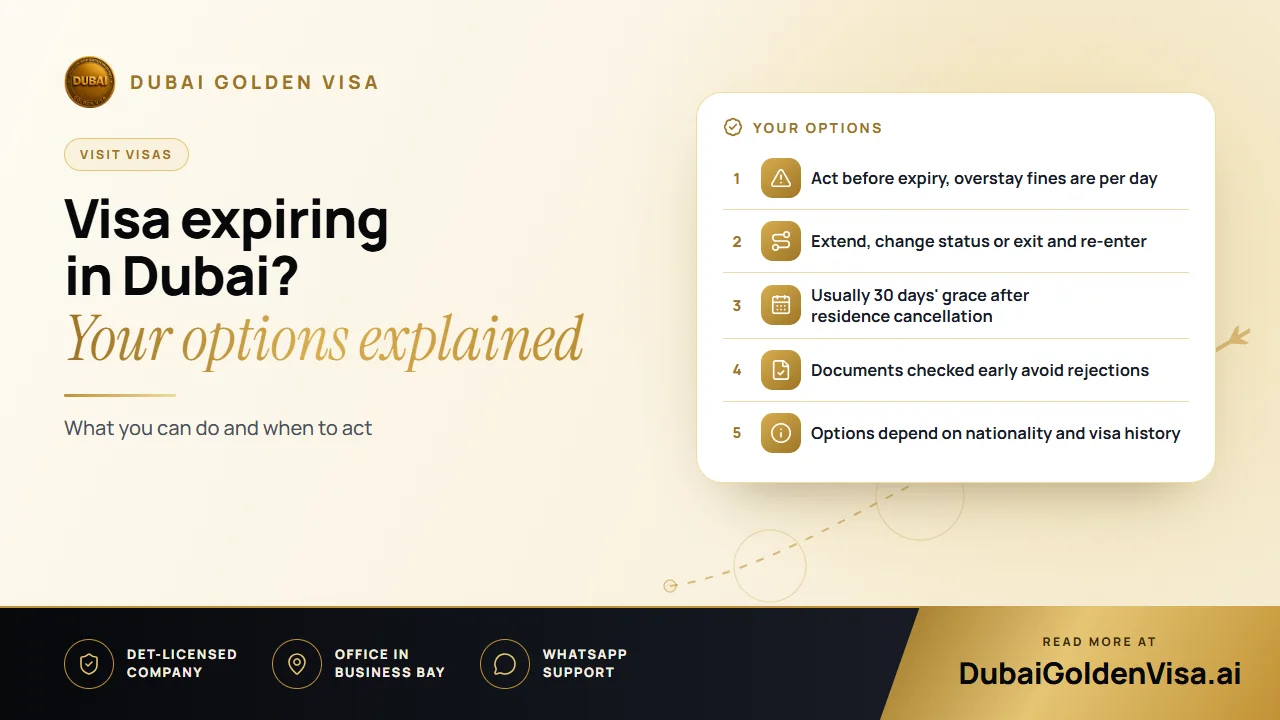
Staying past your permitted date is an overstay. The fine is currently AED 50 per person for each day, and it adds up quickly for a family. An overstay can also complicate future applications. For that reason the best time to ask for advice is a week or more before your date, not on the final day.
02If you are a visitor
Visitors usually have three routes, and which is open depends on your passport, the visa you entered on and your travel record.
- Extension of the existing visit visa, where the visa type allows it.
- A status change inside the country to a new tourist visa, for eligible applicants who do not need to leave.
- Exit and re-entry, where you travel out briefly, often to a nearby country, and come back on a fresh visa.
A 30-day visit is normal for a short holiday, while 60 days suits relatives staying with family, people exploring a job move or those waiting for a new sponsor. If you are unsure which length makes sense, tell us your plans and we will suggest one.
03If your residence was cancelled
When an employment or family residence visa is cancelled, you usually get a grace period of around 30 days to leave, change status or arrange a new sponsor. That window is there so people between jobs are not caught out, but it still ends on a fixed date, so keep the cancellation paper safe and note the day.
Common ways forward include a new job visa, being sponsored by a family member, a tourist visa while you look, or leaving the country. Which one fits depends on your situation. If you might qualify for something longer-term, such as a Golden Visa through property or a business, it is worth checking before you rush into a stopgap.
Tip
Never guess at your end date
The date printed on your visa and the date in the immigration system can differ if something was cancelled or amended. Send us your visa copy and we will confirm your real deadline.
04Documents to have ready
- A clear passport copy showing every page with information on it.
- A recent passport photo on a white background, taken within the last six months.
- A copy of your current UAE visa and your latest entry details.
- Emirates ID, if you were a resident.
- The cancellation paper, if your residence was cancelled.
- A flight itinerary and your address in the UAE, if asked.
Blurred scans and mismatched names cause most of the delays. Check each file before you send it.
05A sensible order of steps
- 1
Find your exact deadline
Read the visa, the cancellation paper or the entry stamp, and ask us to confirm it if unsure.
- 2
Decide how long you need
Think about the next real step, such as a new job start date or a family sponsor's paperwork.
- 3
Pick the route
Extension, change inside the UAE or exit and re-entry, based on what you are eligible for.
- 4
Submit clean documents
Check names, photo and scans before you file.
- 5
Keep the approval with you
Save the new permit and note its entry or expiry date.
No honest adviser can guarantee approval, because UAE immigration makes that call. What we can do is reduce avoidable mistakes and tell you early if a route will not work.
A final point for residents: if you have a family sponsor or a new employer lined up, ask them how long their part will take before you choose a stopgap. A 30-day visit is no help if the new visa will take six weeks, and a 60-day visit is wasted if the job starts next week. Matching the stopgap to the real timeline is the simplest way to stay legal and keep costs down.
If your date is close, message us on WhatsApp with your passport page and visa copy. We will review them for free and tell you what to do next.
Questions about this topic
Sometimes. It depends on the visa type, your nationality and your record, so a quick document check is the way to find out.
Questions about your own case?
Send us a message and an advisor will tell you which route fits and what you'll need.