
Not long ago, many people believed that foreigners could not own property in the UAE at all. That is no longer the case, but the rules do depend on who you are and which area you want to buy in. Before you fall for a view, it helps to know where you are allowed to own and what kind of ownership you get.
This guide covers the main points: who can buy, the types of ownership, the areas that are open, what the purchase costs and how property can connect to residency.
01Who can own property
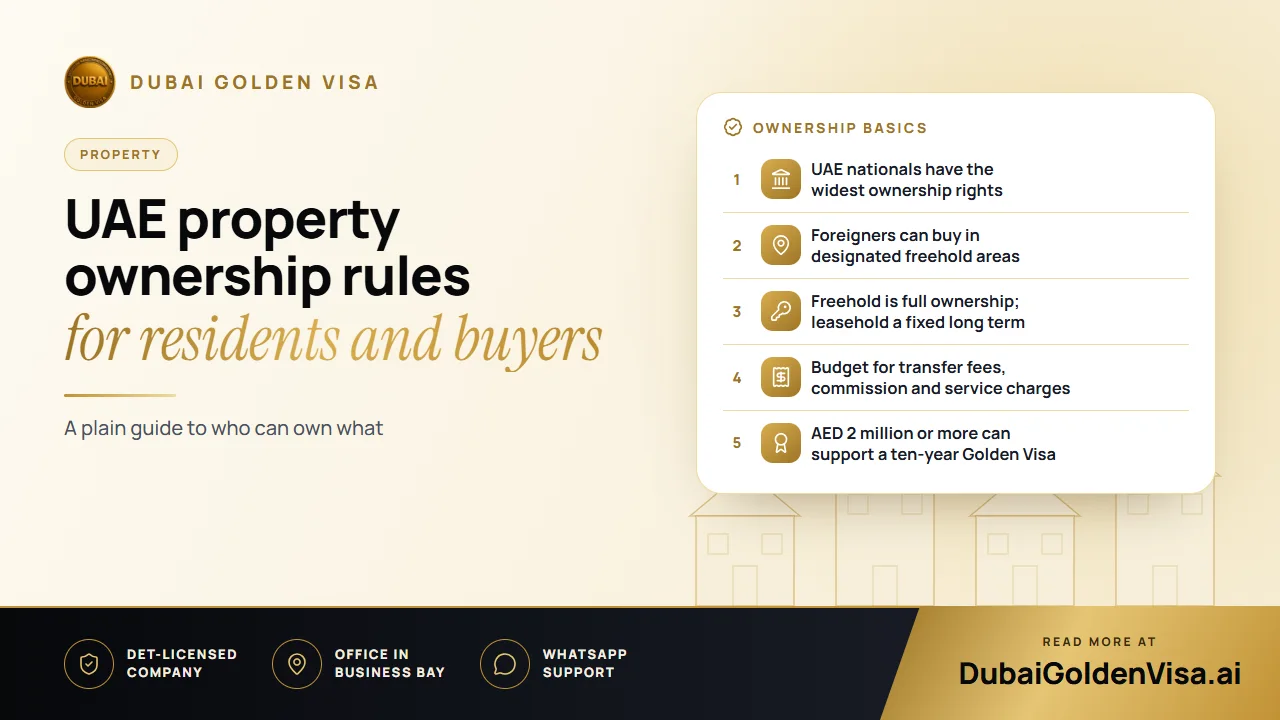
UAE nationals can own across the country. Citizens of other Gulf states generally enjoy wide rights as well. Everyone else, including most expats and overseas investors, can buy in zones designated for foreign ownership, mainly in Dubai and Abu Dhabi. Within those zones, you can own, rent out, sell or leave the property to heirs.
02Freehold and leasehold
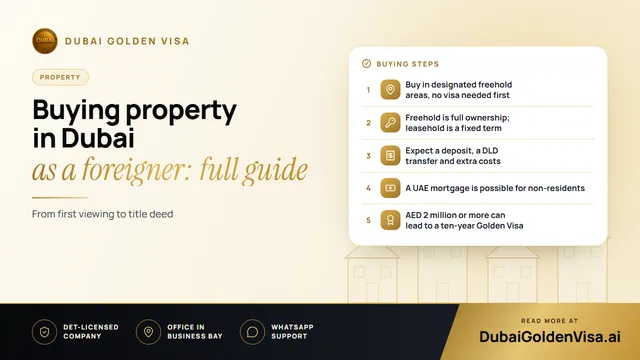
Freehold is the form most buyers want: you own the property outright, with the land share that goes with it, and there is no end date. It is available to foreigners only in the areas set aside for it.
Leasehold gives you the right to use the property for a long fixed period, often decades. When the term ends, the property returns to the owner of the land unless an extension is agreed. Check how many years remain, because that affects what a buyer will pay when you sell.
03Where foreigners can buy
- Dubai: well-known freehold communities include Dubai Hills Estate and Arabian Ranches for villas, and Palm Jumeirah, Downtown, the Marina, Business Bay and JVC for apartments.
- Abu Dhabi: the island developments, such as Yas, Saadiyat, Reem and Maryah.
Each community has a different feel, from waterfront living to quieter, villa-led neighbourhoods. Always confirm that the specific building or plot is within a freehold zone before you pay a deposit.
04The buying process in brief
- 1
Find the property
Use a registered agent and check the unit details.
- 2
Sign the agreement and pay a deposit
A deposit of around ten per cent is common at this stage.
- 3
Get clearance
A no-objection certificate confirms there is nothing preventing the sale.
- 4
Pay and transfer
You pay the balance and the title deed is registered in your name at the land department.
05What it costs beyond the price
- Land department transfer fee, generally four per cent of the property value.
- Registration charges, which vary with the price.
- Agent commission, often around two per cent.
- Service charges for the building or community, which differ by location.
- Mortgage fees, if you finance the purchase.
Add these up before you commit. The sticker price is only part of the picture.
Tip
Renting it out
You can let your property to tenants. Register the tenancy contract with the proper system, and if you want to offer short stays you need the right holiday-home permit.
06Mortgages for expats
UAE banks lend to expats, and some lend to non-residents on stricter terms. Expect minimum salary requirements and a larger deposit than UAE nationals are asked for, typically a fifth to a quarter of the price. Each bank differs, so compare offers rather than rely on a single quote.
07The link to residency
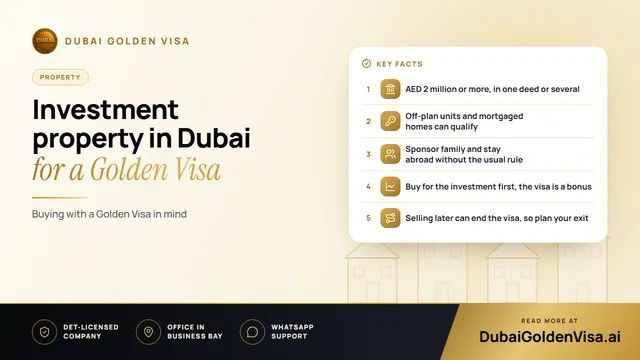
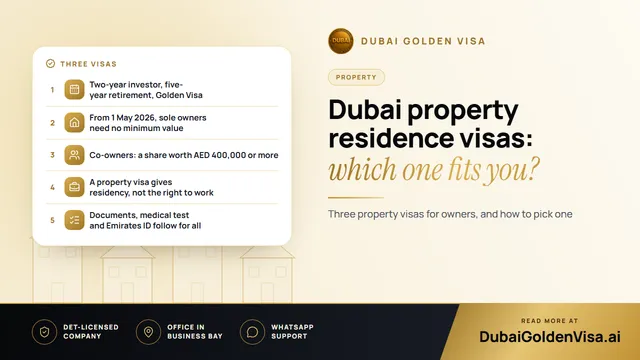
Property worth AED 2 million or more can support a ten-year Golden Visa, as one purchase or several combined. A mortgaged home counts on its full value with the bank's no-objection letter, and off-plan units from approved developers can count too. Smaller purchases may suit other property-based visas. From 1 May 2026, a sole owner of a completed home needs no minimum value for the two-year investor visa, and co-owners each need a share worth AED 400,000 or more.
If you are weighing up a purchase and want to know how it would affect your visa options, message us on WhatsApp for a free chat before you commit.
Questions about this topic
Ownership returns to the landowner unless an extension has been agreed, so check the remaining term before buying.
Questions about your own case?
Send us a message and an advisor will tell you which route fits and what you'll need.