
Dubai opened parts of its property market to foreign buyers in the early 2000s, and it has become one of the easiest places in the world for an overseas investor to own a home. You do not need to live here, hold a visa or have a local partner. You do need to buy in the right place and follow the process properly.
Whether you want a holiday apartment, a rental investment or a base for a future move, the same basics apply. Here is how the purchase works from start to finish.
01Freehold and leasehold: know which you are buying
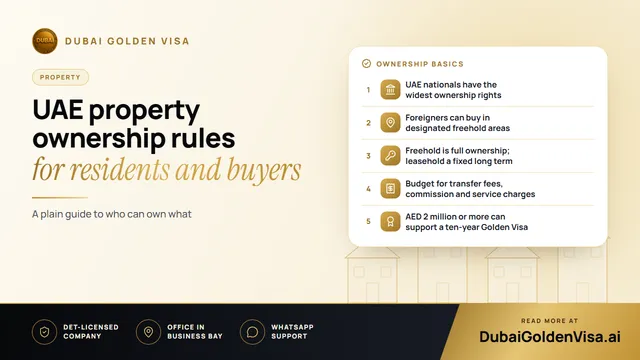
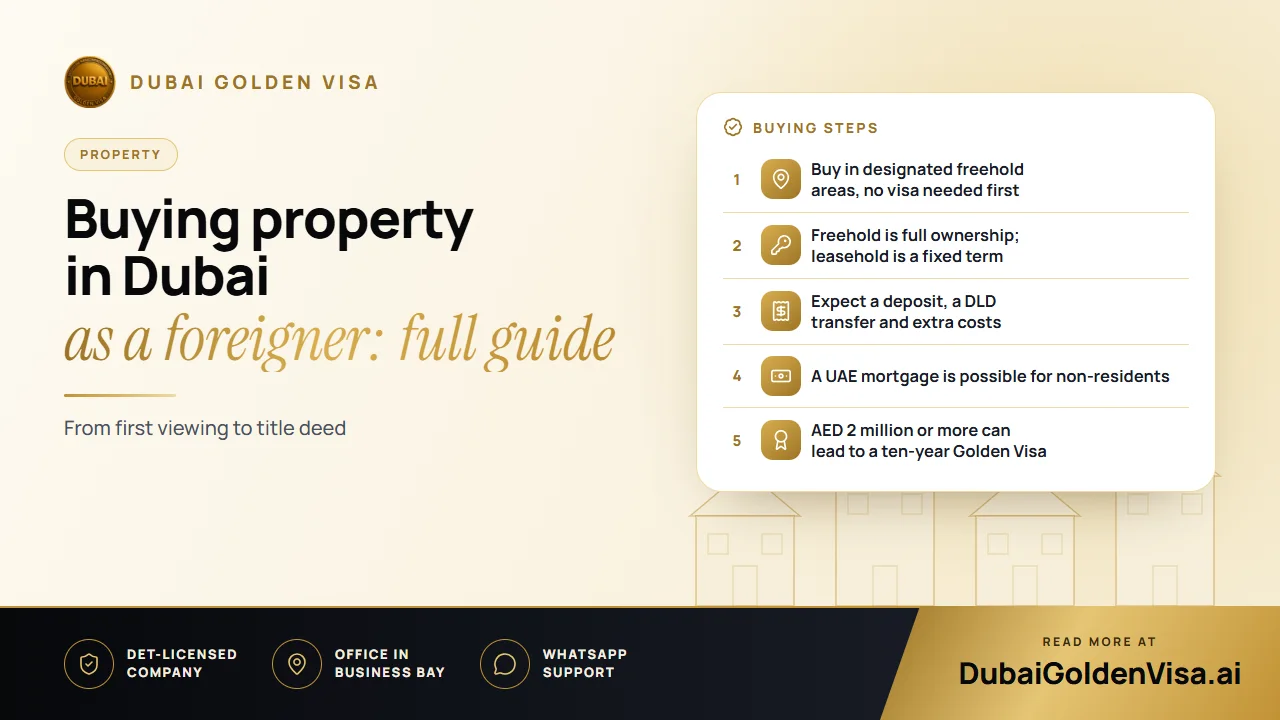
Freehold means you own the unit and the right to sell, rent out or leave it to your heirs. Foreign buyers can purchase freehold only in areas the government has designated for the purpose, and most investors choose these.
Leasehold means you hold the property for a long fixed term, often decades, after which it reverts to the landowner. It can be cheaper, but it is less flexible when you come to sell, so check the remaining years and any renewal terms.
02Choosing an area
Each popular freehold community suits a different buyer. A few of the best known:
- Downtown Dubai: central, high-end apartments close to the major landmarks.
- Dubai Marina: waterfront living with steady demand from tenants.
- Palm Jumeirah: luxury villas and apartments with beach access.
- Business Bay: a mix of homes and offices near the city centre, popular with professionals.
- Jumeirah Village Circle: lower entry prices and a family feel, often chosen by first-time investors.
Visit if you can, and compare a few areas on price per square foot, service charges and rental demand before you commit.
03The buying process
- 1
Set a budget and decide how to pay
Cash is simplest. If you borrow, banks lend to non-residents but typically ask for a deposit of around a fifth to a quarter of the price, proof of income and valid ID.
- 2
Work with a registered agent
Use an agent who is registered with the Dubai Land Department, and check the licence rather than take it on trust.
- 3
Sign the sale agreement and pay a deposit
Once you agree a price, you sign a memorandum of understanding and usually pay a deposit of about ten per cent. Check the title deed and the seller's details first.
- 4
Clear the property
A no-objection certificate confirms there are no unpaid service charges or other blocks on the sale.
- 5
Transfer ownership
You pay the transfer fee and the balance, and a new title deed is registered in your name. This often takes a few weeks from agreement.
04What it costs beyond the price
Budget for the Dubai Land Department transfer fee, which is generally four per cent of the price, plus agent commission, often around two per cent. A mortgage adds a small registration fee on the loan, and you will pay annual service charges to the community or building for maintenance.
There is no annual property tax, which is one reason the market attracts overseas investors. Even so, work out your full cost before you sign, not just the headline price.
Tip
Buying off-plan?
Check the developer's track record and how the payment plan is registered before you pay anything. An off-plan unit is registered with the land department through an Oqood, and that registration matters if you later want to use the property for a visa.
05How property connects to residency
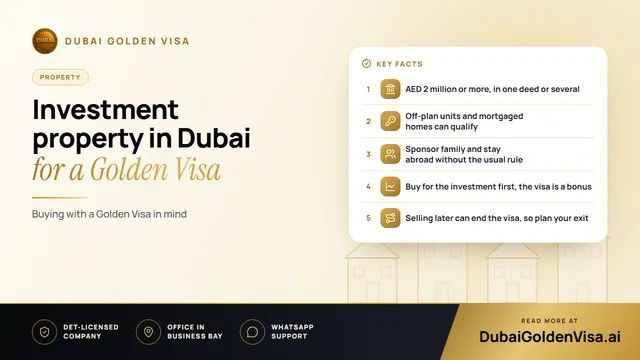
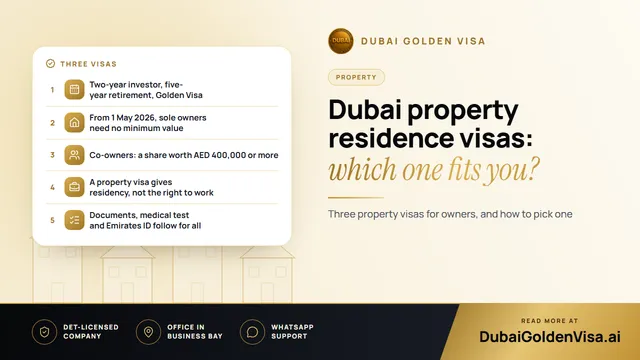
Buying does not give you residency by itself, but it can lead to it. Property worth AED 2 million or more, in one unit or several, can support a ten-year Golden Visa with no employer or sponsor needed. Smaller purchases may suit a two-year investor visa. Since 1 May 2026, a sole owner of a completed home needs no minimum value, while co-owners each need a registered share of AED 400,000 or more.
If you are planning to leave the property to family, it is also worth learning how inheritance works for foreign owners in the UAE, and whether a will registered here would help.
Thinking of buying, or already under offer? Message us on WhatsApp for a free chat about how the property could support a visa, before you pay a deposit.
Questions about this topic
No. Foreign buyers can purchase in freehold areas without residency. A visa becomes relevant only if you want to live here on the strength of the property.
Questions about your own case?
Send us a message and an advisor will tell you which route fits and what you'll need.