
For many people, the home they already own here is the simplest way into ten-year residency. If your UAE property is worth AED 2 million or more, it can support a Golden Visa for you and, once that's issued, for your family too. You don't need an employer, a trade licence or a local sponsor. The property itself is the basis of your residence.
The idea is simple, but the details catch people out. Which value counts? Does a mortgage get in the way? What about an apartment that's still being built? This guide works through the questions we hear most often, so you know where you stand before you apply.
01How the AED 2 million threshold works
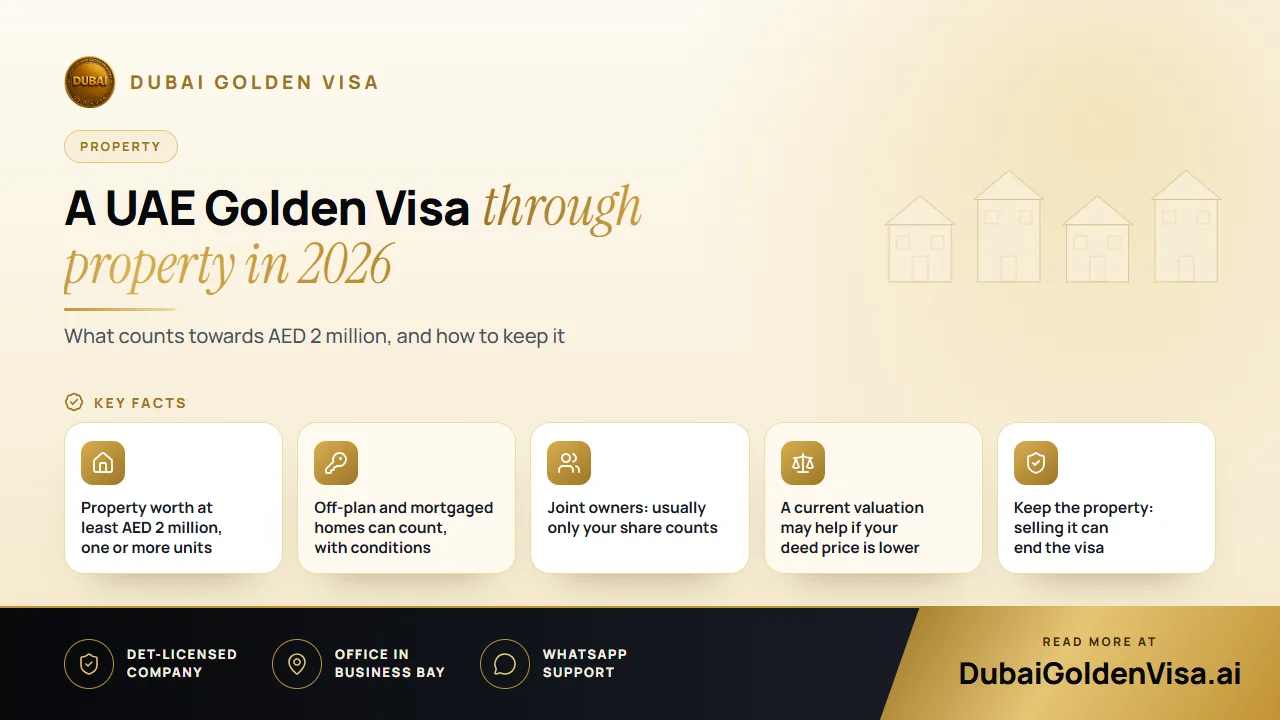
The core test is the value of the property registered in your name. The authorities usually start from the value on your title deed or, for off-plan units, your Oqood registration. A sales and purchase agreement isn't enough on its own, because the property needs to be registered with the land department before it can support a visa.
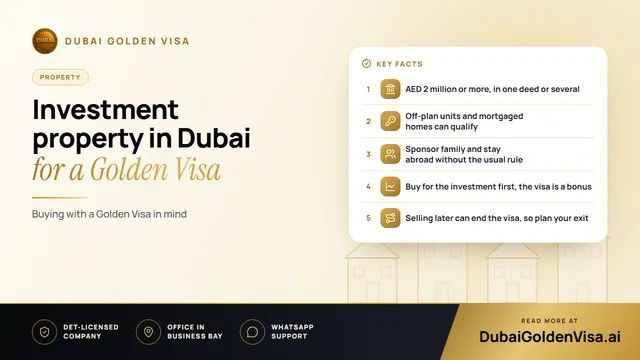
Several properties can be added together. Two apartments worth AED 1.1 million each, for example, would generally clear the bar between them, as long as both are fully in your name. This is often how owners of more modest units discover they already qualify.
Joint ownership is where we see the most surprises. If you own a property with a business partner or a sibling, it's generally your share, not the full price, that has to reach AED 2 million. Couples who own together may have more options, so check how your deed is split before you assume either way.
02Off-plan, mortgaged and older purchases
Off-plan property can count when you've bought from a developer approved by the local authority. Your Oqood registration identifies the unit, and the land department checks the value it recognises. Payment plans are common with off-plan homes, so we look at what you've paid and how your developer reports it before anything is filed.
A mortgage doesn't rule you out either. If your home is financed by a UAE bank, you'll normally need a letter from the bank confirming it has no objection to your residence application, along with how much you've paid and what's still owed. The rules on how much must already be paid have shifted over the years, so we confirm the current position for your property rather than assume.
If you bought some years ago for less than AED 2 million and prices have since risen, a fresh valuation may help. A valuation from a firm licensed by the Dubai Land Department can reflect today's market. If that figure reaches the threshold, it can often support your application.
Tip
Check your deed before you pay for a valuation
Look at three things on your title deed: whose name it's in, the ownership share and the registered value. If the value is already AED 2 million or more and the property is fully yours, you probably don't need a valuation at all. Send us a photo of the deed and we'll tell you.
03The steps, from deed to Emirates ID
- 1
Property review
We check your deed or Oqood, your ownership share, any mortgage and the value against the current rules.
- 2
Valuation or bank letter
Where it's needed, we arrange a valuation. A mortgaged home qualifies on its full value once the bank issues a no-objection letter.
- 3
Land department confirmation
The Dubai Land Department confirms ownership and value so the property can be linked to your residence.
- 4
Residence application
Your file goes to GDRFA Dubai, or to ICP in the other emirates. If you're abroad, an entry permit lets you fly in to finish the process.
- 5
Medical and biometrics
You complete a medical fitness test and Emirates ID biometrics. We book both at times that suit you.
- 6
Visa issued
Your ten-year residence is issued and your Emirates ID follows. Your family can then be added to your file.
Once documents are complete, most straightforward property files take a few weeks. A valuation, a bank letter or an off-plan check can add time at the start, so it pays to get those moving early.
04Documents to have ready
- Title deed, or Oqood registration for off-plan property
- Passport with at least six months' validity
- Recent passport-style photo on a white background
- Current UAE visa and Emirates ID, if you already live here
- Mortgage contract, if the property is mortgaged
- Valuation certificate, if you're relying on today's value
- Health insurance valid in the UAE
One point that's easy to overlook: the property keeps working for you only while you own it. Selling it, or selling one of several units and dropping below the threshold, can bring the visa to an end. If you're thinking about a sale, talk to us first so we can plan your next status.
Not sure whether your property is enough? Send us your deed on WhatsApp for a free eligibility check. Our team will tell you plainly whether you're ready to apply, and what, if anything, stands in the way.
Questions about this topic
Yes. Property anywhere in the UAE can support a Golden Visa. The land department of that emirate confirms the value, and the residence side is handled by GDRFA Dubai or ICP depending on where you live.
Questions about your own case?
Send us a message and an advisor will tell you which route fits and what you'll need.