
You have bought a home in Dubai, or you are about to. Before the first guest or tenant arrives, there is one choice that will do more for your returns than almost anything else: do you let it by the night, or sign a tenant for the year?
There is no universal winner. The right answer depends on where the property is, how much time you want to spend on it and how comfortable you are with income that moves around. Here is how the two approaches really compare.
01What each model looks like in practice
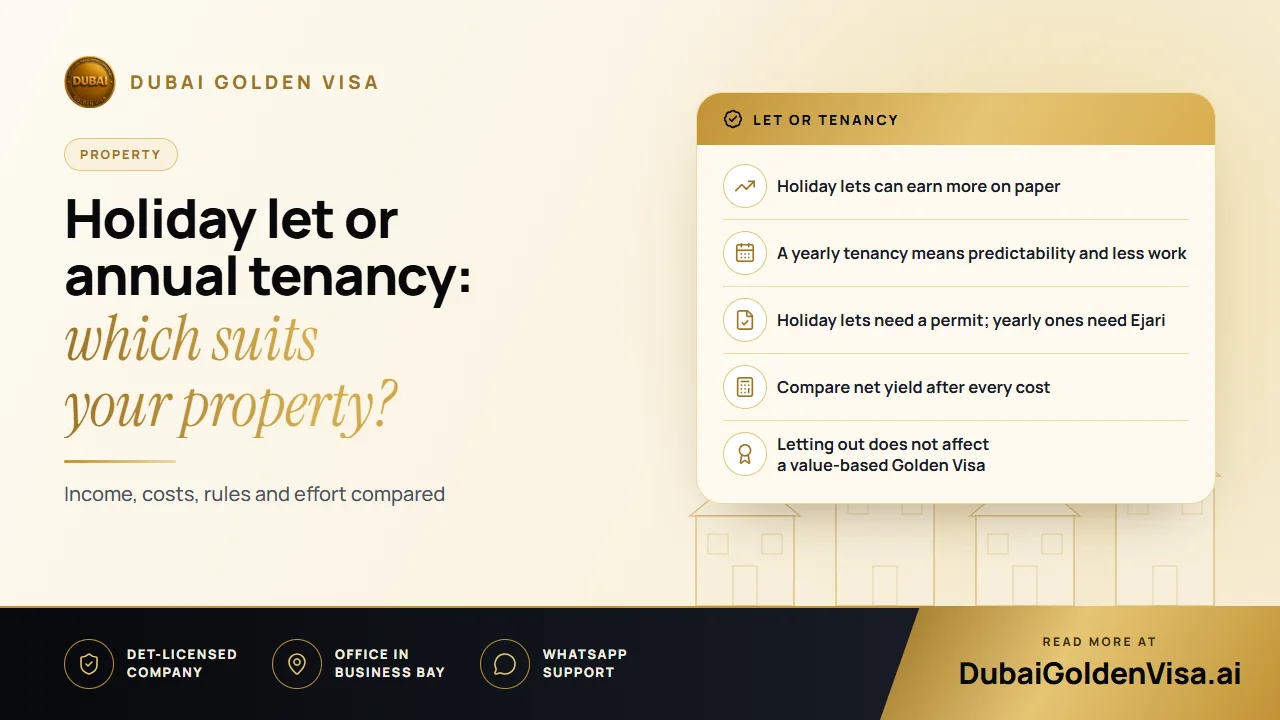
A holiday let is a furnished apartment or villa offered to visitors for a few nights, a week or a month, usually through booking platforms or a holiday-home operator. In Dubai, each unit needs approval from the Department of Economy and Tourism before it can be listed, and the permit has to be renewed. You cannot simply buy a flat and start taking bookings the next day.
A yearly tenancy is the traditional arrangement. A tenant lives in the home on a twelve-month contract and pays rent, and the contract is registered through Ejari. That registration gives both sides an official record, which matters if a dispute ever reaches the rental authorities. Rent rises at renewal follow the government's rental index and need proper written notice, so the ground rules are clear from the start.
02Income and the costs that hide behind it
Holiday homes usually win on gross income. Market reports for 2026 suggest one-bedroom holiday homes gross noticeably more than the same flat on a yearly lease, and the gap is widest in tourist districts. But gross figures are not what lands in your account.
- Operator or management fees, often a fifth or so of takings, if you do not run the bookings yourself
- Cleaning, laundry and restocking after every stay
- Utilities, internet and platform commissions, which the owner normally carries
- Replacing furniture and linen that wear out faster with constant turnover
- Permit fees and the tourism dirham charged per occupied bedroom per night
- Empty nights, especially in the summer heat
A yearly let has costs too, namely service charges, maintenance and the occasional void between tenants, but they are fewer and easier to forecast. Always work out net yield before you decide. A lower rent that arrives reliably can beat a higher one that comes with a full-time job attached.
Tip
A quick test
Take the annual rent a tenant would pay. Then estimate nightly rate times realistic occupancy, minus every cost in the list above. If the holiday-let figure is not clearly ahead, the extra effort is rarely worth it.
03Risk, seasons and supply
Visitor income follows tourism. Winter, the shopping festival and big events lift nightly rates; summer pulls them down. Unexpected disruption to travel can hit holiday-home income hard in a single quarter, as the first half of 2026 reminded owners. The number of licensed holiday homes has also been climbing, so only well-located, well-run units keep their occupancy high.
A yearly tenancy gives you a fixed income stream for twelve months. The price you pay is a ceiling on what you can earn and less flexibility, because the home is committed to one tenant.
04Where each approach tends to work
Location matters as much as the model. Areas close to the beach, the Marina, Downtown and Business Bay attract visitors and suit holiday lets. Family-oriented and value-focused communities such as Jumeirah Village Circle, Arjan, Silicon Oasis and Dubai South draw steady long-term tenants, and some of them show strong yearly yields. Many of these neighbourhoods are also home to buildings with their own rules, so read the building regulations and your sale contract before you plan anything.
05Effort, flexibility and the hybrid option
Nightly lets mean check-ins, housekeeping, guest messages and constant price tweaks. Owners who live abroad nearly always hand this to a licensed operator. In return you can adjust prices to demand and use the home yourself between bookings. A yearly tenancy is close to hands-off, but it ties the property up.
Some owners combine the two: licensed holiday letting through the cooler, busier months, then monthly or longer stays in summer. It can smooth the quiet season, though you must check your building's rules and your permit before switching models.
06How to choose
- Choose holiday letting if the home is in a visitor hub, you can live with uneven income and you will use a licensed operator.
- Choose a yearly tenancy if you want steady, low-effort income in a residential area.
- Consider a hybrid if you want extra income without a dead summer and the building allows it.
07Where the Golden Visa fits
If the property is worth AED 2 million or more, it can support a ten-year Golden Visa, whether it is empty, let to a tenant or listed for guests. What counts is the value and your ownership, not how the home is used. Ready homes, approved off-plan units and mortgaged properties with a bank no-objection letter can all be eligible, so the rental strategy and the residency plan do not have to compete.
Weighing up a purchase or a letting plan? Message us on WhatsApp and our team will give you a free check on whether the property can support a Golden Visa, so you can choose your rental model with the residency side already settled.
Questions about this topic
Often on gross income, but not always after costs. Management, cleaning, utilities and empty nights can shrink the difference, so compare net figures.
Questions about your own case?
Send us a message and an advisor will tell you which route fits and what you'll need.