
The excitement of buying in Dubai often fades into a practical question: what now? Owning a home here is a sound step, but two quiet decisions decide whether it works well for you over time. One is how the property is protected. The other is whether it earns you the right to live here.
This guide takes them in that order, because protection is the one people skip, and the visa is the one they usually ask about first.
01Why protection matters for expat owners
If an owner dies without a valid will, the property can be distributed under default rules that may not match what the family expects. That can mean delays, court involvement and difficult conversations at the worst possible moment. The people left behind may wait months before they can sell, rent or transfer the home.
A properly prepared will avoids most of this. For non-Muslim residents, wills can be registered through the DIFC Wills Service or through Abu Dhabi's judicial department, depending on where you live and own assets. Muslim residents have their own arrangements. Either way, the aim is the same: your wishes are written down and recognised.
Tip
Do the will early, not later
A will takes far less time to register than a family takes to untangle an estate without one. If you own property in more than one country, ask how your wills fit together so they do not clash.
02Trusts and foundations
Owners with several properties, assets in more than one country or a wish to keep control within a family sometimes use a trust or a foundation. These structures separate who owns an asset from who controls it, and they can give an extra layer of continuity. They are not necessary for everyone, and they need specialist advice, so treat them as an option to discuss, not a default.
03Turning ownership into residence
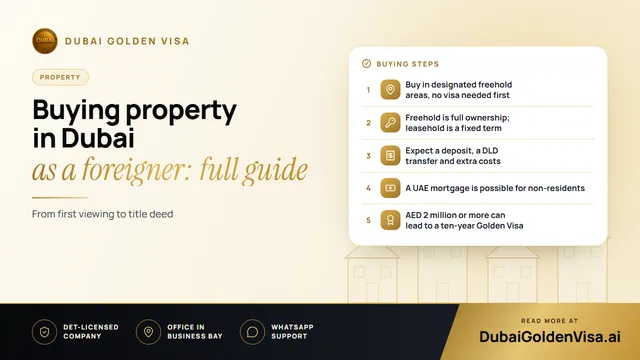
Owning property does not give you residence automatically. You need to apply for a visa that the property supports. Which one depends on the value and how the property is held.
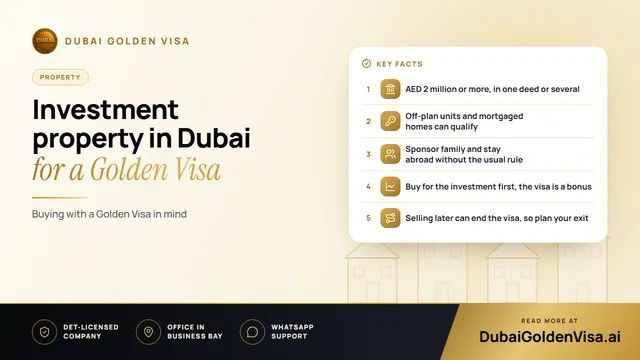
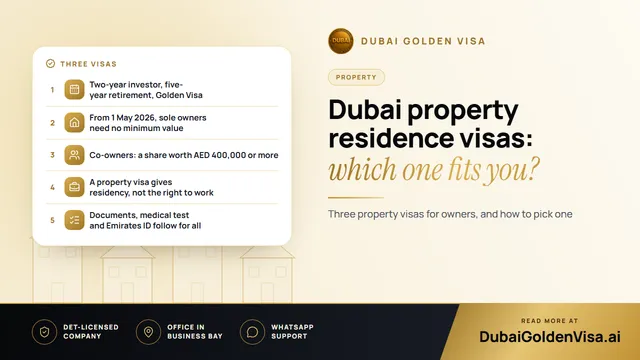
- Golden Visa: property worth AED 2 million or more, held in one deed or several, for ten years, renewable.
- Two-year property investor visa: since 1 May 2026, a sole owner of a completed home needs no minimum value, and co-owners each need a registered share worth AED 400,000 or more.
- Retirement visa: five years for those aged 55 or over with property worth AED 1 million or more.
A Golden Visa makes you your own sponsor. You are not tied to an employer, you can bring your spouse, children and parents, and the absence rule that can cancel standard visas after six months abroad does not apply.
04How the Golden Visa route works for homeowners
- 1
Check your deed
We look at ownership, share and value. Off-plan homes count through an Oqood from an approved developer, and mortgaged homes count on their full value with the bank's no-objection letter.
- 2
Confirm the value
If your deed shows an older price, a current Dubai Land Department valuation may replace it.
- 3
File the application
Property files usually take five to seven working days once the documents are complete.
- 4
Medical and Emirates ID
These follow initial approval, with no gap in your current status.
Government costs for the property route are roughly AED 9,459 for the main applicant, with each family member costing about AED 2,710 plus AED 1,180 for the Emirates ID, and AED 285 for the medical test for adults.
05Living here, not just owning here
Once you hold the visa, the daily side of life opens up. You can open a bank account with a UAE address, register utilities, sign a school contract and enrol the family in health cover. There is no personal income tax on salary, which many residents consider a strong reason to base themselves here.
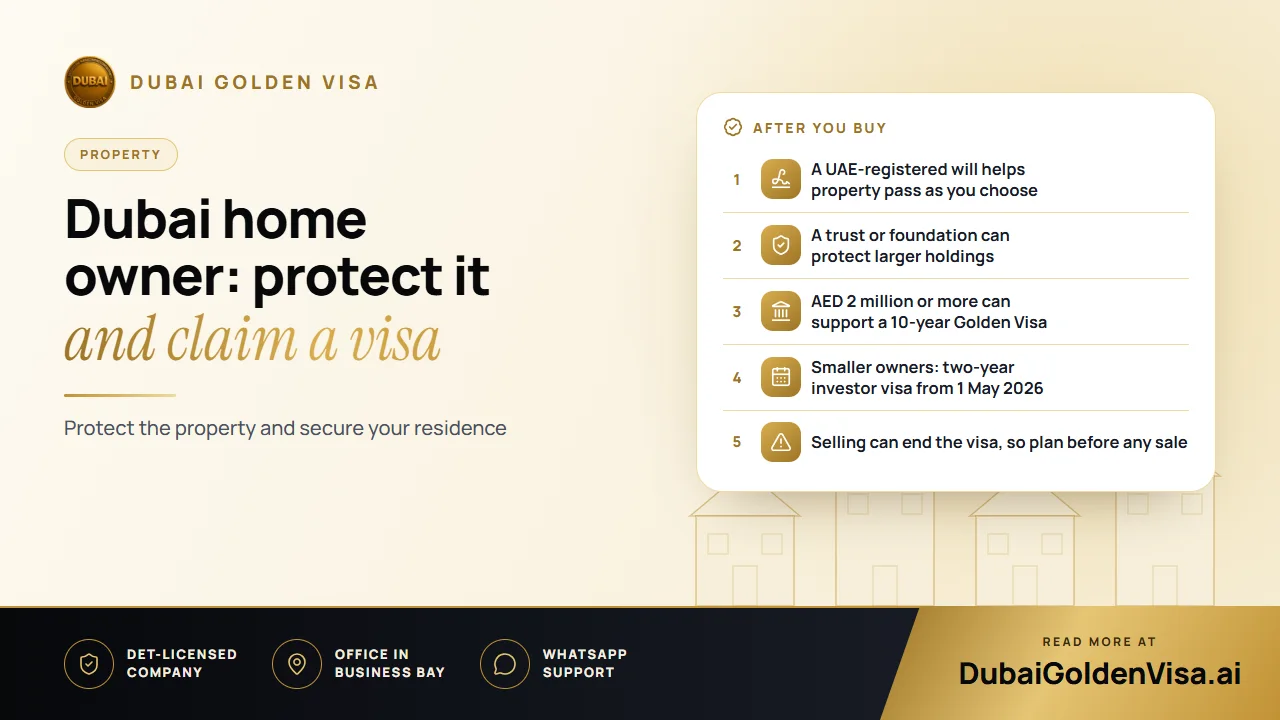
Keep one point in mind: the visa depends on the property. If you sell, or sell one of several homes and fall below the threshold, the visa can end. Talk to us before you list a property so we can plan your next status.
Own a property and want to know which visa it supports, and whether your will covers it? Message us on WhatsApp for a free check. Send a photo of your deed and we will tell you what to do next.
Questions about this topic
No. It can be your home, a rental or a holiday apartment. What matters is ownership and value.
Questions about your own case?
Send us a message and an advisor will tell you which route fits and what you'll need.