Most Dubai business ideas begin the same way: a shop, a consultancy, an import operation or a small studio. Then comes the question that stops people for a week or two. Which licence do I need, and who issues it? The answer shapes your costs, your premises, your visas and the customers you can serve.
This guide walks through the licence types, the mainland and free zone choice, the costs people forget and the order in which an application usually runs. It is general information; the authority you apply to has the final word on its own rules.
01What a licence actually does
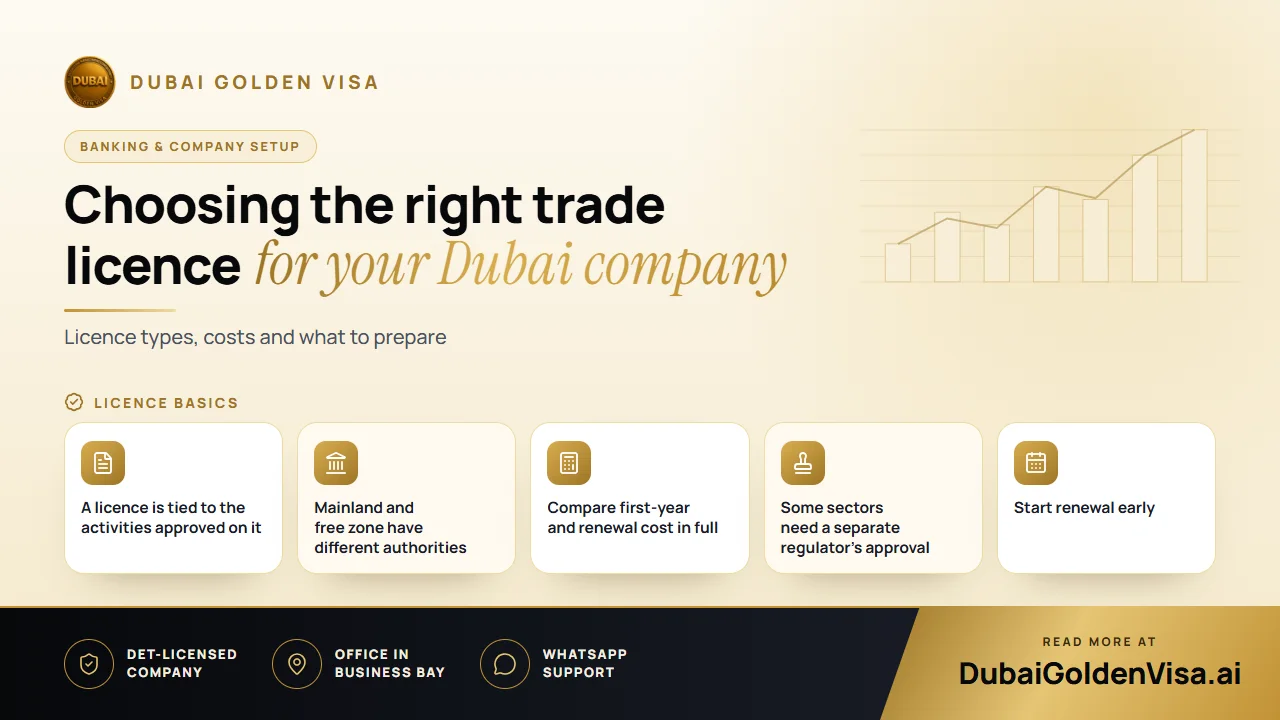
A trade licence is the official permission for a company to carry out a defined list of activities. It records the company name, the legal form, the issuing authority and the activities you were approved for. Registering a company does not mean you may do any kind of work you like. If your plans change, the licence has to change with them.
It also unlocks the practical side of running a company. Banks ask for it when you open a corporate account, the immigration side needs it before you can sponsor employees or an investor visa, and a landlord will want to see it before agreeing a lease for commercial premises.
- Permission to operate within the activities listed on it
- A base for a corporate bank account, subject to the bank's own checks
- Eligibility to apply for investor and employee residence where the rules allow
- The right to sign contracts and lease premises in the company's name
- A starting point for any extra permits your sector demands
02The main licence types
The UAE recognises several families of licence. The three you will meet most often are commercial, professional and industrial.
- Commercial: for buying, selling and trading goods, such as retail, wholesale, import and export. If you plan to trade several product lines, check they can sit on one licence.
- Professional: for services built on skills or qualifications, such as consultancy, marketing, design, IT advice and some training. The authority may ask for proof of qualifications, and the activity should match what you will genuinely deliver.
- Industrial: for manufacturing, processing and production. These usually need proper premises such as a unit or warehouse, and checks on safety, equipment and building use.
Tourism, agriculture and crafts have their own categories too. Travel agencies and tour operators, for instance, cannot rely on a general licence; they need the sector approval as well. Dubai also offers options such as e-trader and dual licences, each with its own eligibility, so confirm yours with the authority rather than assuming a lookalike will do.
03Mainland or free zone?
Mainland companies in Dubai come under the Department of Economy and Tourism, a body many people and older papers still call DED. A free zone company is licensed by the authority of that specific zone, which sets its own activities, packages and fees.
Neither is better in general. Mainland tends to suit businesses that want a shop, restaurant or office in the city and plan to deal directly with local customers. A free zone can suit a company that wants a particular industry setting, ready facilities or a bundled package. What it should not be treated as is blanket permission to trade freely across the mainland; that depends on the activity and the rules involved.
Tip
Ask four questions first
Who will your customers be, where will you physically work, how many visas will you need, and does your activity need a second regulator? Your answers usually point to the right jurisdiction before you compare a single price.
04What drives the cost
There is no single price for a Dubai licence, which is why quotes you collect can look so different. Two companies in the same emirate can pay very different totals because their activities, structure, premises and visa needs differ. A cheap package may include almost nothing; a dearer one may bundle a workspace.
- Trade name reservation and initial approval
- Licence issue and company registration documents
- Office, shop or warehouse rent and tenancy registration where required
- Approvals from other regulators for controlled activities
- Establishment, immigration and visa charges
- Annual renewal, which can differ from the first-year price
Beyond the licence itself, remember medical tests, Emirates ID, health insurance, accounting and bank costs. Ask for an itemised quotation that separates one-off charges from yearly ones, and check the authority's current fee schedule, because it can change.
05The application, step by step
- 1
Define your activities
Write down what you will sell or deliver, then match it to the authority's activity list. Read each description, not just the title.
- 2
Pick jurisdiction and legal form
Decide between mainland and a free zone, then choose a structure that fits your ownership and liability needs.
- 3
Reserve a trade name
The name must follow the authority's rules and not clash with an existing one. A reserved name is not permission to start trading.
- 4
Obtain initial approval and outside permits
Regulated sectors such as healthcare, education or finance need another body's consent. Find this out early.
- 5
Arrange premises and documents
Secure the office, unit or flexible workspace the authority requires and gather shareholder and company papers.
- 6
Pay and collect the licence
Once the authority confirms the file, you pay the charges and receive the licence. Check whether your activity needs any inspection before you open.
06Documents and renewal
Lists vary by authority and structure, but expect passport copies for shareholders and managers, UAE visa and Emirates ID copies for those who have them, the proposed trade names, the chosen activities, a tenancy or workspace agreement where needed and any parent-company papers for a branch. Documents issued abroad often need attestation before they are accepted.
Renewal follows the validity period the authority sets. Before it, check the expiry date, whether your activities or address have changed, whether the lease is still valid and whether any fines or outside permits are outstanding. Leaving it to the final days risks extra charges and a pause in trading.
Planning to set up a company and want to understand how it links to residence, banking or an investor visa? Message us on WhatsApp for a free check and we will help you work out the sensible next step.
Questions about this topic
Yes, foreign investors can set up companies in the UAE, subject to the rules for the chosen activity, structure and authority. A few activities carry extra ownership or regulatory conditions.
Questions about your own case?
Send us a message and an advisor will tell you which route fits and what you'll need.