
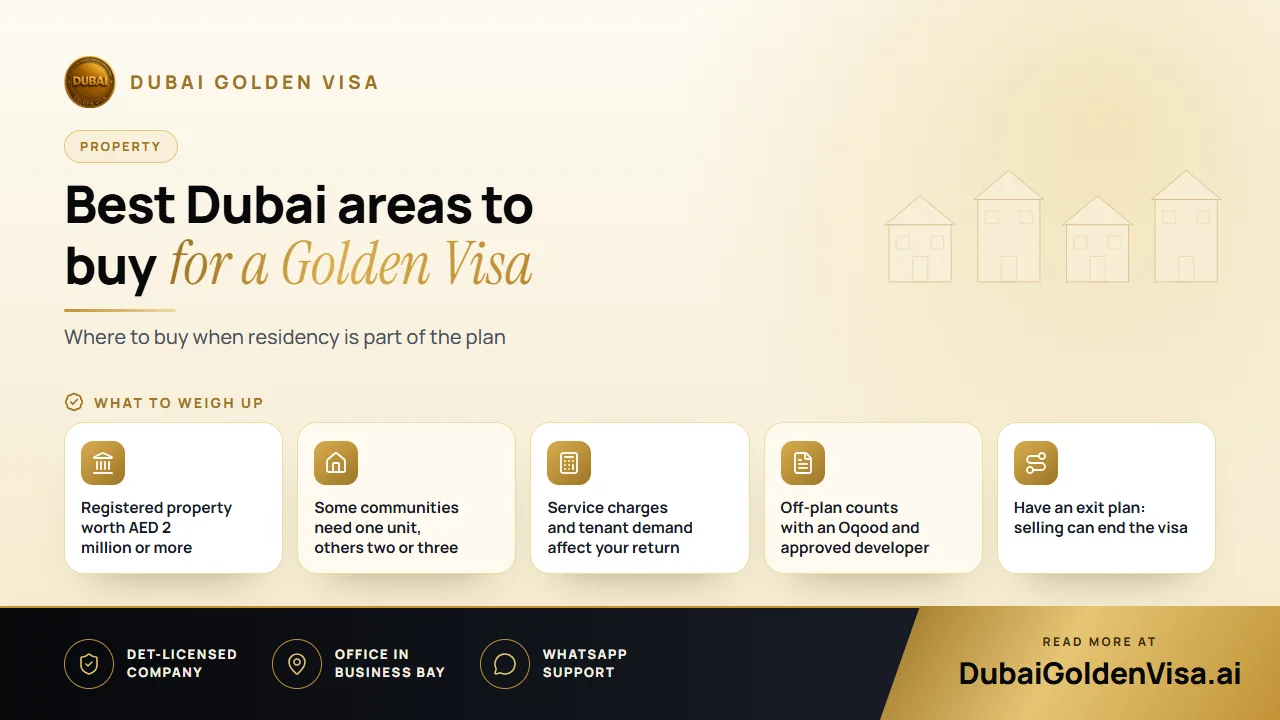
Plenty of buyers start with the visa and work backwards: they know they want a ten-year residence and need AED 2 million of property to get it. What they don't yet know is where to put that money. The authorities don't mind which neighbourhood you pick, as long as the property is registered, in a place where you're allowed to own, and valued high enough. That freedom is useful, but it also means a poor choice is entirely yours.
Below we look at nine communities that come up again and again in our conversations with buyers. We have kept price talk general, because figures move every quarter. Treat this as a way of thinking about location, then ask us or a licensed agent for today's numbers.
01What the visa actually requires from the property
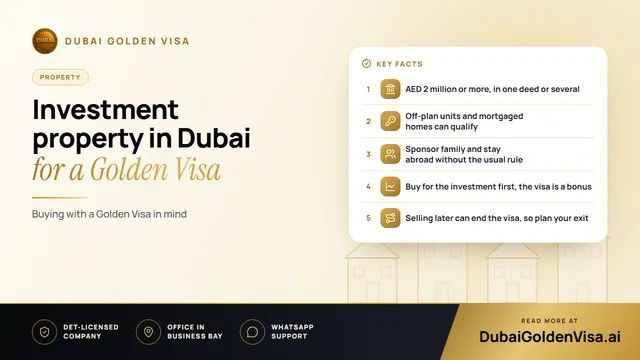
Your property, or the total of several properties, must be worth AED 2 million or more. The value that counts comes from your title deed, or from a current Dubai Land Department valuation if that is higher. Off-plan units can count when you hold an Oqood registration and the developer is approved. A mortgaged home can count on its full value once the bank issues a no-objection letter.
Because several units can be added together, you don't need a trophy apartment. Many owners reach the threshold with two or three more modest homes, as long as every deed is in their name.
02Nine communities and who they tend to suit
- Downtown Dubai: prestige and strong resale demand. Prices are high, so a single well-sized apartment often reaches the threshold on its own.
- Dubai Marina: a mature waterfront district with a deep tenant pool, popular with owners who want regular rental income and holiday-let flexibility.
- Palm Jumeirah: scarce, high-value homes. It is more a long-term capital story than a rental one, and most units sit comfortably above the threshold.
- Business Bay: an urban district close to Downtown, favoured by young professionals. It offers a middle path between price and rental demand.
- Jumeirah Village Circle: lower entry prices, so buyers typically combine several units to reach AED 2 million. Popular with investors who care about rental yield more than status.
- Dubai Hills Estate: villas, townhouses, schools and parks. It suits families who intend to live in the property and value stable resale demand.
- Bluewaters Island: small, distinctive and expensive. It appeals to buyers who want something rare and are comfortable with premium service charges.
- Dubai Creek Harbour: a newer waterfront masterplan, with much of the stock sold off-plan. You may need to bundle units, and patience is part of the deal.
- Dubai South: an emerging area near the airport and the expo site. It is a longer bet on infrastructure and future growth.
03Matching the area to your goal
Ask what you want the property to do. If it will be your family home, schools, space and commute matter more than headline yield. If it is an investment, look at how quickly similar units are let, what the building charges in service fees, and whether tenants in that area tend to stay.
Buyers chasing the highest rental figure sometimes forget that luxury towers can have heavy running costs. A smaller gross return in a building with modest charges can leave you better off than a bigger return eaten up by fees. Run the numbers on net income, not the advertised percentage.
Tip
Check the visa before you reserve the unit
Send us the unit details, the developer name and the payment plan before you sign anything. We can tell you whether the registered value, the ownership structure and the registration type will support a Golden Visa, so you don't discover a gap after paying a deposit.
04Off-plan: attractive, but choose the developer carefully
Off-plan homes are common in the newer communities, and they can count for the visa once registered. The risk is not the visa rule but the project: delays can stretch your timeline and delay rental income. Favour developers with a record of handing over on time, and read the payment schedule and registration steps closely.
05Sensible habits for any buyer
- Don't buy on hype alone; compare similar listings and recent registered sales.
- Ask for the service charge per square foot and what it covers.
- Check that the unit is a registered residential or commercial property, not land on its own.
- Think about demand: some areas let faster than others, and that affects any gap between tenants.
- Plan your exit. Selling later is easier in areas with active resale markets, and you should talk to us first so your visa status isn't caught out.
Once the property is registered in your name, the Golden Visa lets you be your own sponsor and, unlike a standard residence visa, it isn't cancelled by long stays abroad. That makes the choice of area a matter of lifestyle and return rather than visa logistics, which is exactly how it should be.
Still comparing areas? Message us on WhatsApp with your budget and what you want from the property. We'll give you a free check on how it fits the Golden Visa rules and point you to the questions worth asking before you buy.
Questions about this topic
Not in itself. What matters is that the property is registered, sits in a place where you can legally own, and meets the AED 2 million value. Each emirate's land department confirms the value.
Questions about your own case?
Send us a message and an advisor will tell you which route fits and what you'll need.