
A well-presented listing can make a purchase feel straightforward. In reality, buying in Dubai is a chain of decisions: why you are buying, where, what you can truly afford, and whether the paperwork holds up. Most regrets come from skipping one of those links.
This checklist is for people buying a first home, a holiday base or an investment unit. It also covers the question we hear most from overseas buyers: does owning here mean you can live here?
01Start with your reason for buying
Your purpose shapes everything else. If you will live in the property, think about the daily routine: the journey to work, schools, clinics, shops and public transport. If it is a base for occasional visits, airport access and building facilities may matter more.
Investors need a different lens. What tenants will pay, the yearly service bill, the state of the block and the supply of comparable flats all shape the outcome. An advertised yield rarely accounts for empty months, repairs and fees, so treat it as a starting point. Prices and returns can move either way, and neither should be taken as certain.
02Who can buy, and where
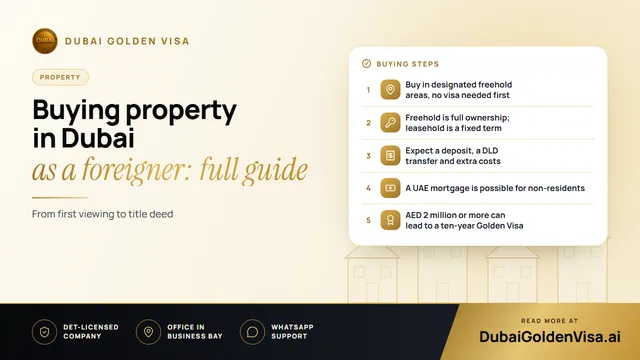
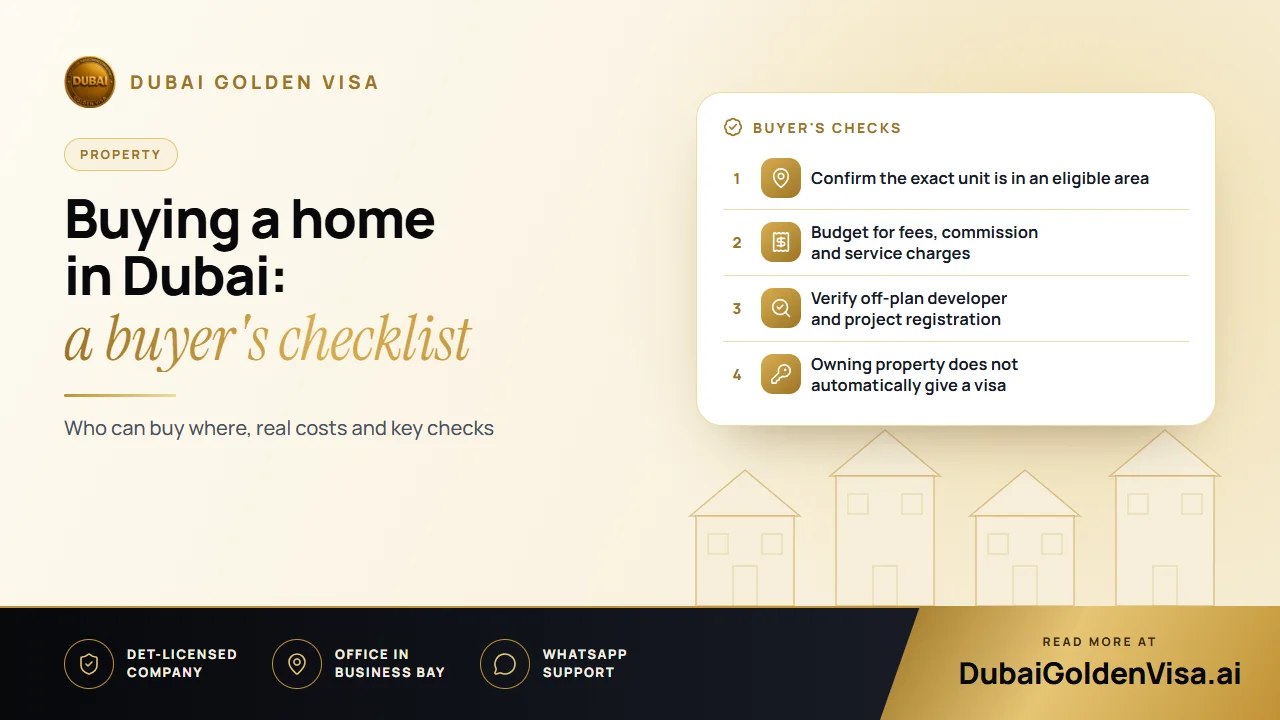
Living in the UAE is not a condition of buying a home in Dubai. Foreign buyers, whether they are residents or based overseas, can purchase in areas set aside for foreign ownership. That does not mean every listing qualifies. Confirm that the specific unit sits in an eligible area before you put money down.
The type of right matters too. Freehold is common in designated zones, while some locations offer leasehold or usufruct arrangements instead. These are not interchangeable: the length of the right, what you may do with the unit and the way it passes to a new owner can all differ. Ask the Dubai Land Department or a property lawyer to explain exactly what interest the documents record.
03Finding the right property
Set a ceiling before you browse, and leave headroom for the extras. Then write a short list of must-haves, such as a one-bedroom near a Metro station or a family villa with a garden, and separate them from the nice-to-haves.
Treat listings as leads, not proof. For a completed unit, visit in person: look at the rooms, but also the lobby, lifts, parking and shared areas, ideally at a busy hour so you notice noise and traffic. For off-plan, the homework is different because there is nothing to walk through yet.
- Ask for the approved floor plan and specification, and compare both with the sale contract.
- Look into the developer's earlier projects.
- Check that the development appears in the Dubai Land Department's records.
- Make sure completion and payment dates are written into the agreement.
- Keep written answers; a verbal promise from a salesperson is not a contract term.
04The buying process for a resale home
- 1
Set your real budget
Include transfer charges, agent or legal fees, mortgage costs and early repairs. A bank can indicate its lending terms before you negotiate.
- 2
Shortlist buildings, not just units
Maintenance, parking and the state of shared areas affect both daily life and resale.
- 3
Confirm ownership
Request the title details and satisfy yourself that the seller is entitled to sell. Learn whether a mortgage or unpaid service charge must be cleared first.
- 4
Agree the terms in writing
Price, deposit, payment dates, handover and any condition such as mortgage approval should be recorded.
- 5
Read the sale agreement closely
Names, unit details and dates matter, as do the clauses on cancellation, delay and failure to complete. Take independent advice on anything unclear.
- 6
Collect the remaining documents
You may need a no-objection certificate from the developer, and a mortgage can bring bank paperwork of its own. Ask the registration trustee for a list specific to your sale.
- 7
Complete the transfer
Finish through the Dubai Land Department's approved process, then check the title deed and keep it with the signed agreement and payment records.
05What it really costs
The asking price is only part of the figure. The Dubai Land Department's transfer fee is 4 per cent of the price and is customarily paid by the buyer, though parties can agree how some costs are shared, so ask for a written breakdown showing who pays what. Other items can include title deed and registration charges, agent commission, a no-objection certificate fee and, with a mortgage, valuation, processing and registration costs.
After completion, owners face annual service charges, utilities, insurance and maintenance. A cheaper apartment with heavy service charges can cost more to hold than a pricier one, so compare running costs as well as price tags.
Tip
Protect your off-plan payments
Before sending money, check the project's registration and escrow details with the Dubai Land Department and compare them with your contract. If anyone emails or messages different account details, stop and confirm with the developer and the authority first.
06Does buying give you residency?
Not by itself. A title deed does not issue a visa. It can, however, support a residence application if the property and the owner meet the conditions of a particular route. The Golden Visa for property investors looks for UAE property worth AED 2 million or more, which can be one deed or several, and which can include off-plan units from approved developers and mortgaged homes with the bank's no-objection letter. Co-ownership, financing and older purchase prices need checking case by case.
If residency is part of your plan, check eligibility before you sign, not afterwards. A short review of the deed or the draft contract is far cheaper than discovering a shortfall later.
Thinking of buying and wondering whether the property could also give you residence? Send us the listing or your deed on WhatsApp and we will give you a free, honest check.
Questions about this topic
Yes, in areas open to foreign ownership. Verify the unit's ownership category and ask the registration trustee which identity and transaction documents you will need.
Questions about your own case?
Send us a message and an advisor will tell you which route fits and what you'll need.