

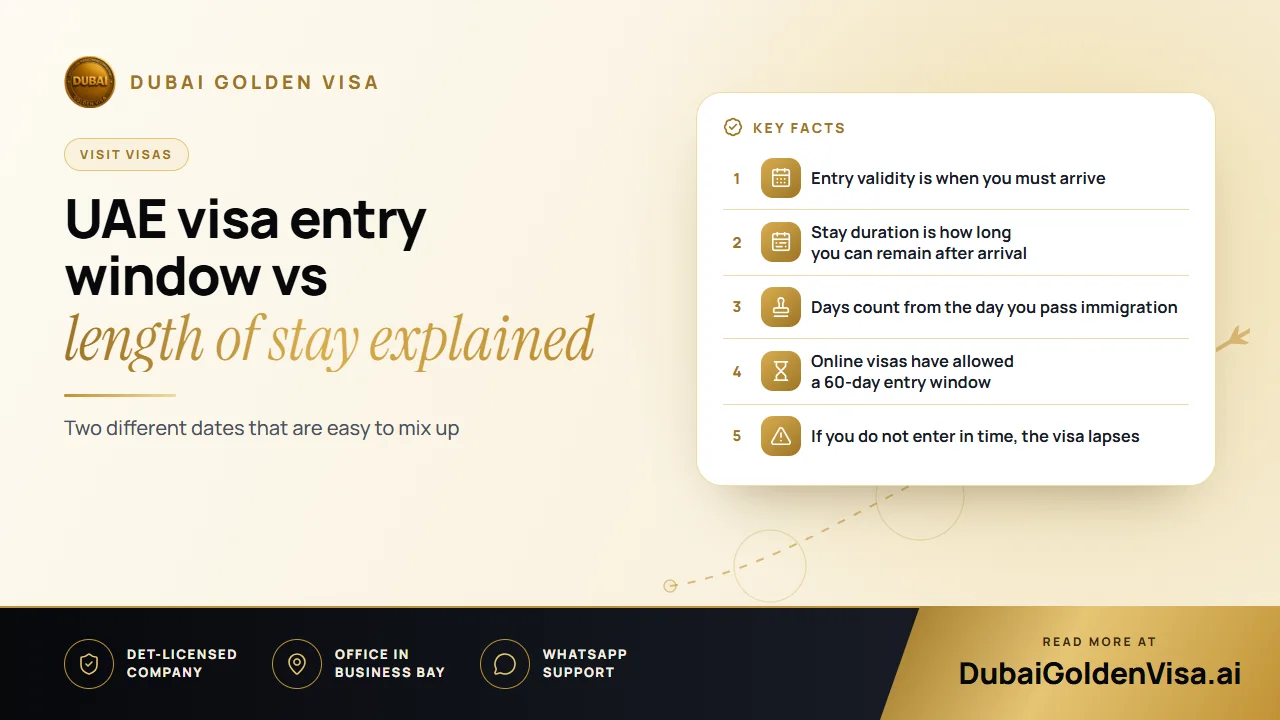
Ask a group of travellers how long their UAE visa lasts and you will get a mixture of answers. Some mean the number of days they can stay. Others mean the number of days they have to arrive. Both are real, and they are not the same thing.
Understanding the difference is especially helpful when your travel dates are uncertain, for instance when airline schedules are moving or you are waiting for leave to be approved. It lets you plan with a little more freedom.
01Clock one: the entry window
Entry validity is the period during which the visa can be used to enter the country. For tourist visas issued online, this has usually been up to 60 days from the date of issue. If you do not arrive within that period, the visa expires and cannot be used.
Take an example. If a visa is issued on 5 March and has a 60-day entry window, you could arrive on any day up to 4 May. You do not have to fly immediately. That flexibility is useful if you want to choose the best fare or wait for a firmer schedule.
02Clock two: the length of your stay
Stay duration is the number of days you may remain in the UAE once you have entered. A 30-day visa allows a stay of 30 days. A 60-day visa allows a stay of 60 days. The counting starts when you clear immigration on arrival, not on the day the visa is approved.
Tip
Do not add the two together
A 30-day visa with a 60-day entry window does not give you 90 days in the country. You must arrive inside the window, and then your stay is limited to the 30 days.
03Why this matters when plans are unsettled
Regional events and airline decisions can lead carriers to change routes or timings. Such changes are a normal part of aviation, and they are often precautionary. They can still make travellers hesitant about locking in a date.
A visa with a generous entry window lets you secure the permission first and then watch flight updates. You can pick your departure inside the window once the picture is clearer, instead of rushing a last-minute application.
- Secure your travel permission early, without committing to a flight day
- Follow airline updates calmly and choose the most suitable date
- Avoid last-minute processing stress if a deadline is close
- Have time to correct a document if one is queried
04Why applying early can help
Demand for visas tends to rise when travel is easy and tourism picks up, for example around school holidays, big events and winter. Busy periods can mean longer queues, and the cost of services can move with demand. Applying ahead of the rush gives you the benefit of normal processing times.
For visit visas through us, standard processing usually takes 2-3 working days, with express at about 12-24 hours when documents are complete. These are targets, not guarantees, so it is wise to start sooner than you think you need to.
05How to check your own visa
- 1
Find the issue date
Look at the date the visa was issued. The entry window starts counting from there.
- 2
Find the use-by date
Work out the last day you can arrive. Put it in your calendar with a reminder a week before.
- 3
Note the stay length
Check how many days you may stay and whether the visa is single or multiple entry.
- 4
Plan your exit date
Count your permitted days from arrival and write down the last day you can be in the country.
Overstaying brings a fine of AED 50 per person for each day, so the exit date is worth noting as carefully as the arrival date.
06A word about changing plans
If your flight moves, check the new date against the entry window before you accept it. A change of a day or two is usually harmless, but a bigger shift could push your arrival beyond the window. In that case, speak to us before you travel.
Not sure how the dates on your visa work? Message us on WhatsApp for a free check and we will walk you through them.
Questions about this topic
The visa expires and cannot be used. You would need to apply again for a new one.
Questions about your own case?
Send us a message and an advisor will tell you which route fits and what you'll need.