
Ask ten travellers whether they need insurance to visit Dubai and you'll get ten different answers. Some remember being asked for it during the pandemic years. Others read a forum post saying it's compulsory, or a different one saying it's irrelevant.
The honest answer depends on the visa and the circumstances. This article separates what the application normally asks for from what is simply good sense, so you can decide without guesswork.
01What a standard tourist application asks for
For most visit visas, the checklist is short: a clear passport copy, a recent photograph and your travel details. Depending on your nationality and the route, you may also be asked for accommodation details or an onward or return ticket.
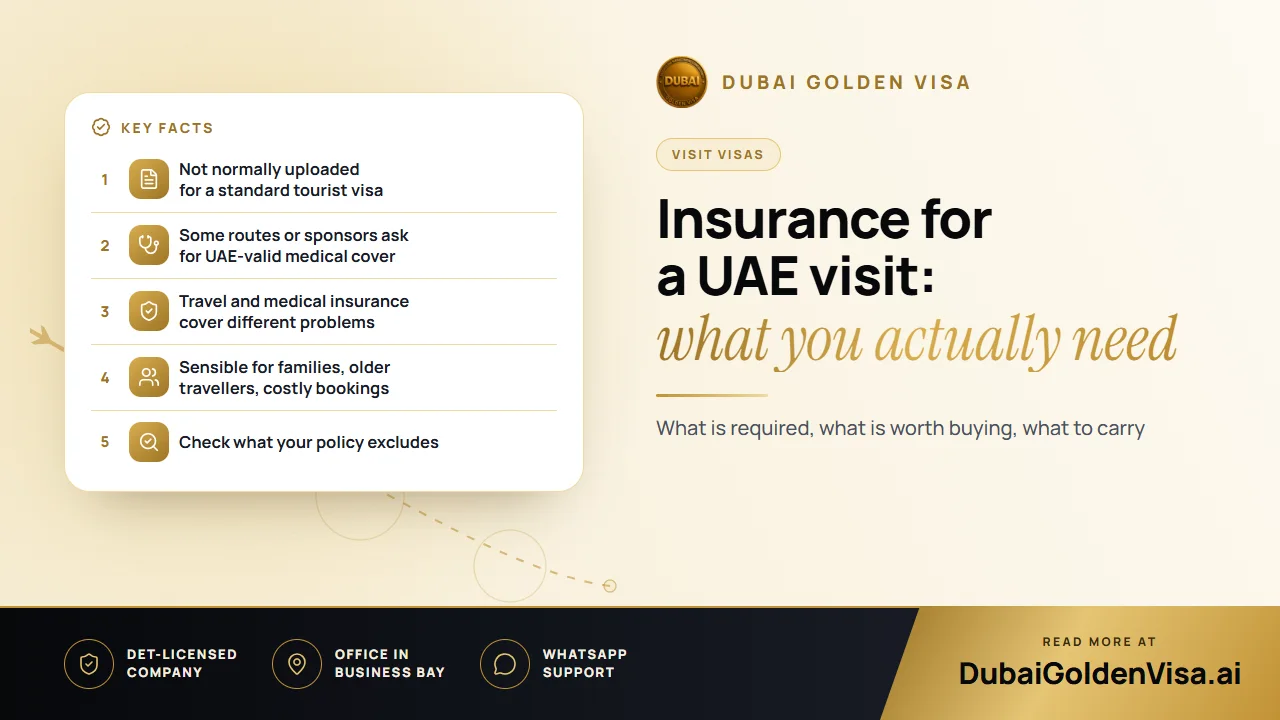
In the typical case, there isn't a box for uploading a travel insurance policy. That said, requirements can differ by nationality, sponsor and visa type, and they can change. When you message us, we check the requirements for your passport before anything is filed, so nothing is missed.
02Was insurance only a pandemic rule?
Largely, yes. During the pandemic years many countries made health cover a condition of entry, and visitors got used to being asked for it. That wide demand has eased, so you are not normally asked for a stand-alone certificate in the way people once were.
However, some visa categories, and some arrangements where a host or company sponsors the stay, can still involve medical insurance that is valid inside the UAE. If you are in one of those situations, we'll tell you.
03Travel insurance and medical insurance are not the same
People use the two terms as if they mean the same thing, and that causes confusion at application time.
- Travel insurance usually bundles several protections: trip cancellation, delayed flights, lost luggage, interruption to your journey and sometimes emergency treatment.
- Medical insurance is narrower. It is about hospital care, emergency treatment, accidents and medical support while you are in the country.
When a visa route does call for insurance, it is usually the medical side that matters, covering treatment in the UAE, rather than a full package with baggage and cancellation benefits.
Tip
Healthcare here is excellent but not cheap
A visit to a private clinic or an overnight stay can cost far more than visitors expect. If you have no cover and need care, you pay on the spot. A modest policy often costs less than a single unplanned consultation.
04Should you buy cover anyway?
Often, yes, even where nobody demands it. Dubai is well organised and most trips go smoothly, but things do happen: a fall in a shopping mall, a stomach bug that needs a drip, a flight cancelled at the last minute or a bag that arrives a day late.
Cover is especially worth considering in these situations:
- Travelling with young children or elderly parents.
- Booking non-refundable hotels, tours or events.
- Planning adventure activities such as dune driving or watersports.
- Having an existing medical condition that might need attention.
- Joining a long trip with several stops, not just Dubai.
05Mistakes we see most often
- 1
Assuming it's always compulsory
It is not a universal requirement for every visit visa, so don't pay for something you may not need on the strength of a rumour.
- 2
Assuming it's never relevant
Some routes do involve UAE medical cover, so check before you travel rather than at the border.
- 3
Buying cover without reading the exclusions
Many policies exclude pre-existing conditions, certain sports and alcohol-related incidents. Read the summary page.
- 4
Leaving the policy at home
Keep the policy number and the insurer's emergency line on your phone and on paper.
06Choosing a policy without overspending
You don't need the most expensive plan. For a short Dubai stay, look for emergency medical treatment with a sensible limit, cover for hospital stays, and clear terms on flight disruption if you have paid for hotels or tours in advance.
Compare the excess, which is the amount you pay before the insurer steps in, and check whether the policy needs you to call a helpline before seeking treatment. Some insurers refuse to pay if you skip that step, even for genuine emergencies.
Families sometimes find that a single family policy costs less than several individual ones. Frequent visitors may do better with an annual plan than buying fresh cover for every trip.
If you are applying for a visa and unsure about your own requirements, send us your passport details and travel dates on WhatsApp and we'll check them for free.
Questions about this topic
Normally not for a standard visit visa, though it is worth carrying proof of any cover you have.
Questions about your own case?
Send us a message and an advisor will tell you which route fits and what you'll need.