
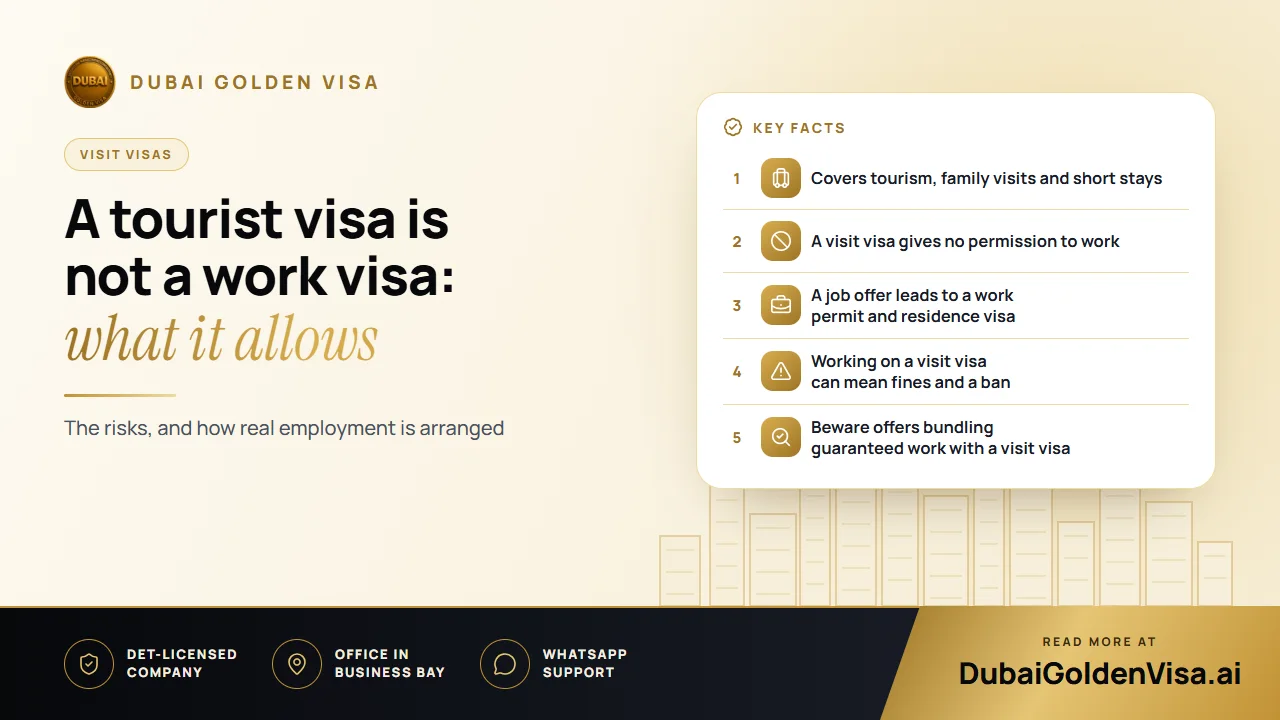
Every year, people fly into the UAE on visit visas with the hope of finding a job once they land. Some do succeed, but the path is narrow and the risks of getting it wrong are real. The confusion usually starts with a simple question: what exactly does a tourist visa allow?
The answer is simple: a visit visa is for visiting. This article explains where that line sits, why advertisements that blur it deserve suspicion, and what the correct sequence looks like when work is your goal.
01What a visit visa covers
A visit visa lets you enter the UAE for a defined period, usually 14, 30 or 60 days, for tourism, to see family or friends, or for short business-related visits such as meetings. It does not create a relationship with an employer, and it gives you no right to take a paid job, start freelancing or run a business.
The visa also has an end date. Staying past it triggers fines at AED 50 per person per day on top of the problems that come with overstaying, and a new application later can be harder.
02Why work and tourist visas get confused
Some people hear stories of friends who arrived as visitors, found an employer within days and were then switched to a work visa. That does happen, but it works in a specific order: the employer makes the offer, arranges the work permit and then the residence visa, and only after that do you begin work.
- Start date comes after the permit and visa, not before
- The employer normally handles the work permit application
- A medical test and Emirates ID follow once the visa is issued
- Your status may need to change inside the country or at a border exit and re-entry
Tip
A red flag worth remembering
Any advert that promises a guaranteed job and a tourist visa for one payment is describing something that cannot legally be sold. Employment in the UAE is arranged by employers, with permits issued through the relevant government channels, not by an agent selling a visitor visa.
03The risks of working on a visit visa
Working without a permit can expose both you and the employer to penalties. For the worker, that can include fines, cancellation of your status and a ban on re-entry. Because you have no formal contract or insurance, you also have little protection if wages are delayed or the arrangement ends suddenly.
It is better to accept a slower start than to begin work informally. Employers who are serious about hiring will complete the paperwork before your first day.
04Sensible routes for people seeking work
- Arrange interviews remotely first and travel once an offer is in hand
- Ask whether the employer will sponsor an employment visa and cover the permit
- If you will visit to job hunt, choose a visit length that gives you enough time
- Consider whether a freelance or virtual-working route fits your profession better
- Keep copies of your qualifications ready, since attested documents may be needed
If you plan to stay and work in a more settled way, there are residence options worth knowing about too. Skilled professionals earning a high enough basic salary may even qualify for a Golden Visa, which makes you your own sponsor.
- 1
Get the offer in writing
A signed offer or contract from a real employer comes before any visa spending.
- 2
Employer files the permit
The employer applies for the work permit through the proper channels.
- 3
Status is changed
Your residence visa is issued, either from inside the UAE or after entry.
- 4
Medical and Emirates ID
You complete the fitness test and ID registration, then start work.
If you are unsure whether your plans fit a visit visa, message us on WhatsApp for a free check. We will explain which visa suits your situation and what to avoid.
Questions about this topic
Generally yes, attending interviews or meetings is a normal visitor activity. Starting actual paid work is not.
Questions about your own case?
Send us a message and an advisor will tell you which route fits and what you'll need.