
Ireland is home to students, skilled workers and families from all over the world. When they plan a trip to Dubai, a common assumption is that an Irish Residence Permit, the IRP card, works like a golden ticket. It does not. It confirms your permission to live in Ireland, and nothing more where the UAE border is concerned.
The focus here is residents of the Republic of Ireland who travel on passports from other countries. It explains how to work out your route, what to do about residence-based exceptions and how to choose a visa for your trip.
01Residence and nationality answer different questions
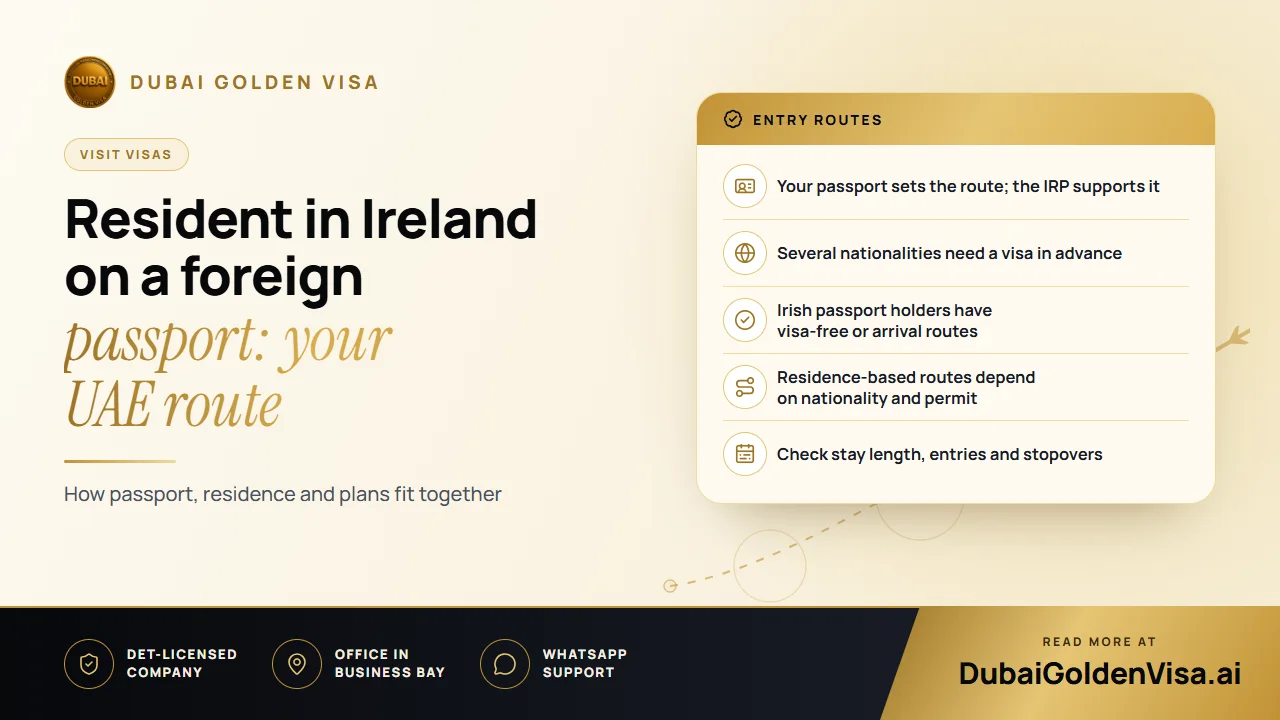
Think of it in two parts. The Irish permission tells the UAE where you live. What you hand over at the airport, the passport, sets where your entry route begins.
- Advance visa: ordinary Nigerian, Pakistani, Turkish and Egyptian passports generally call for a UAE visa obtained ahead of the flight, and an IRP alone does not change that.
- Passport-based entry: Irish citizens and many other nationalities can enter on arrival or without a visa. What counts is the passport you will really use.
- Residence-based entry: certain nationalities can use a special route because of a qualifying residence permit, provided the permit has enough validity left.
On that last point, the UAE has widened the list of nationalities that can use a residence-based route, and European Union member states, Ireland included, count as qualifying residence countries. The permit must meet the validity conditions in force, and airlines can apply their own checks, so confirm the arrangement for your nationality before you fly.
Tip
Northern Ireland is different
Northern Ireland is part of the United Kingdom, so residents there should follow guidance for UK residence permission rather than the Irish IRP.
02Choosing the right visa for your trip
Once you know you need an advance visa, think about how long you will be in the UAE and whether one entry is enough or you will come and go. Availability can vary by passport, so we confirm it before you commit.
- 14-day visit: a short stay, where the option is open to your passport
- 30-day single entry: a holiday or visit to family that fits within a month
- 60-day single entry: when your itinerary needs more than a month
- Multiple entry: if you will leave the UAE and come back during the same trip
- Transit visa: if your connection includes entering Dubai, arranged with the airline for eligible passengers
Changing planes does not always call for a tourist visa. If you stay inside the transit zone, ask your airline how tickets and bags are handled. Leaving the airport, or collecting bags through immigration, means entering the country.
03Getting your paperwork in order
Whatever your nationality, a few items come up again and again. Collect them before you start so you are not hunting for a scan at the last minute.
- A passport with at least six months’ validity and a clear copy of the details page
- Both sides of your current IRP, if requested
- A recent colour photograph on a plain background
- Flight details, with an onward or departure ticket
- Accommodation or host details in the UAE
- Medical insurance valid in the UAE
Compare the spelling of your name across the passport, the IRP and your flight booking. If they differ because of a renewal or a name change, tell us instead of altering a document image.
04Planning your return to Ireland
A UAE visa has nothing to say about your right to return to Ireland. Check the expiry date of your IRP against your return date, and carry the card with your valid passport. If your permission is being renewed, ask Irish immigration officials what you will need to re-enter before you leave, and do not assume a renewal acknowledgement will do the same job as a valid card at the boarding gate.
Students should compare holiday dates with the IRP expiry and any change of status after graduation. Workers should keep leave dates in line with the itinerary. Neither a college letter nor an employer’s approval proves UAE visa eligibility.
Remember also that a visit visa has no grace period. The date it ends is your last day in the UAE.
A last practical tip: apply early and keep digital copies of the passport, the IRP and the approved visa on your phone. Airline staff in Dublin may ask to see your visa or proof of eligibility before they let you board, and having everything to hand avoids a stressful check-in.
If your nationality is not one of those above, send us your passport country, passport type and Irish residence status on WhatsApp. We will check the options for free and tell you what to prepare.
Questions about this topic
No. It is evidence of permission to live in Ireland. Your passport nationality decides whether you need a visa first.
Questions about your own case?
Send us a message and an advisor will tell you which route fits and what you'll need.