
For a founder, visa renewals are a distraction. Every couple of years you are collecting papers, waiting for stamps and wondering what happens if funding dips. A ten-year Golden Visa changes that, because you become your own sponsor and your residence no longer depends on one company or one trade licence.
There is no single startup visa that suits everyone, though. Which route you take depends on how your company is structured, how much capital it holds and whether it has been backed by a recognised programme. This guide sets out the options honestly.
01Route one: company owner or partner
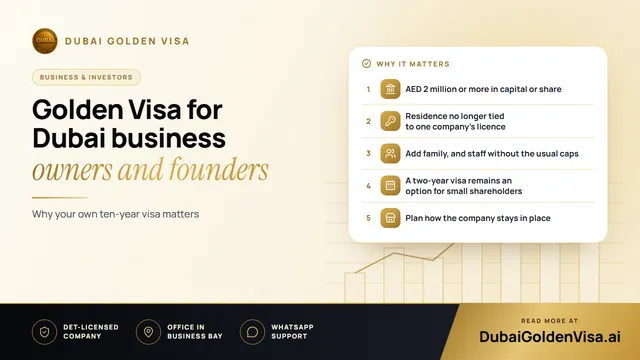
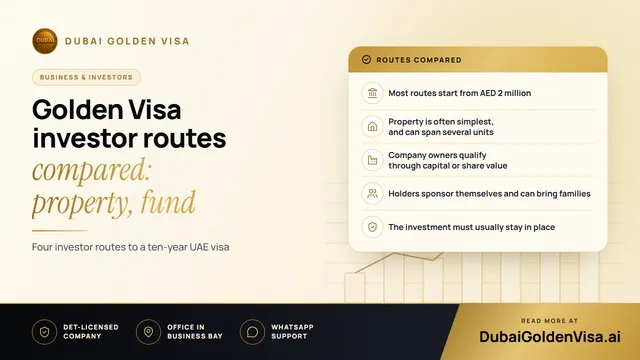
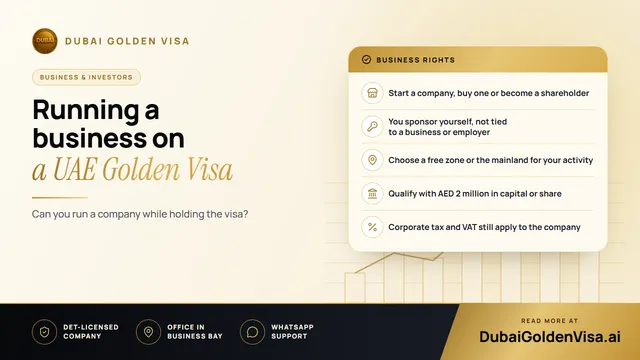
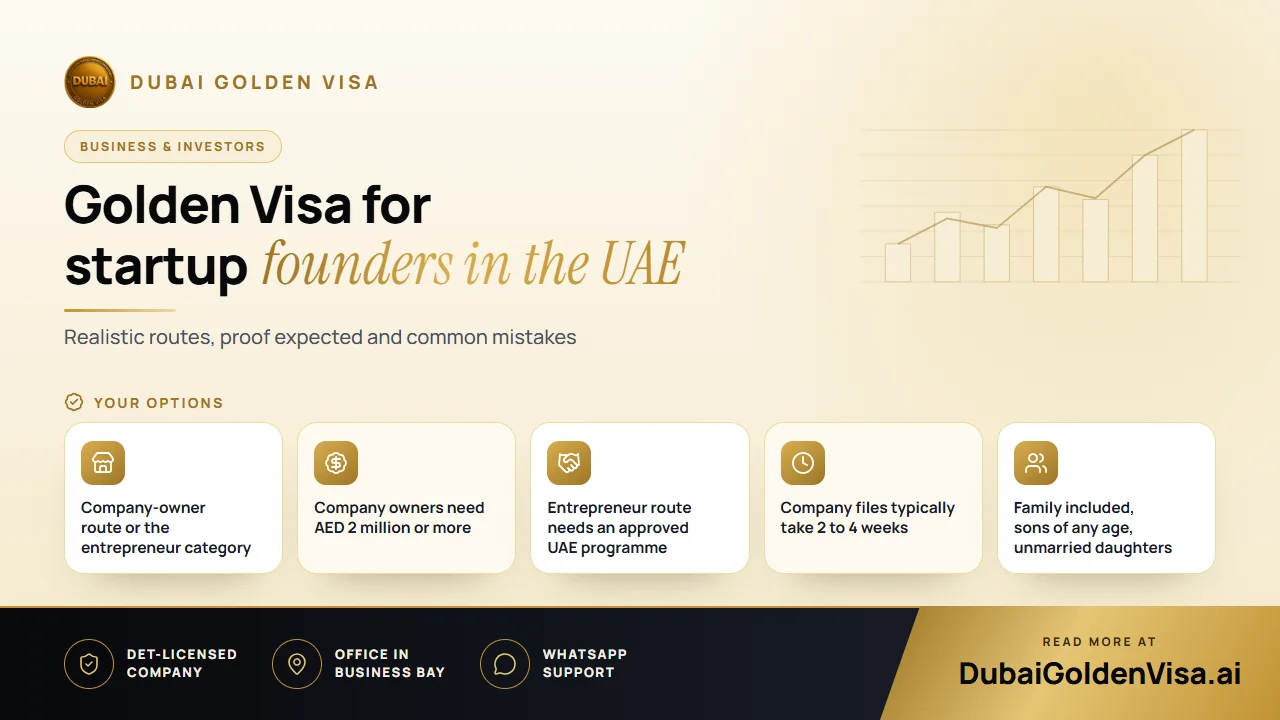
If you own or co-own a UAE company, the Golden Visa is available when your share or the company's capital reaches AED 2 million or more. This is the cleanest route for established businesses and for founders who have put real capital into the company.
You will need to show the company is genuine and that you hold the stake you claim. That generally means the trade licence, the memorandum or share documents showing your ownership, and evidence of the capital. If the value is spread among several partners, check carefully that your own portion meets the figure.
02Route two: the entrepreneur category
The Golden Visa also has a category for entrepreneurs with an early-stage project. Instead of a large capital figure, it relies on the project being assessed and supported by an approved UAE incubator or accelerator, together with a modest level of funding or backing. Because the exact thresholds and the list of approved programmes can change, you should confirm the current position before building plans around it.
In practice, this route suits founders who are still early, who have a credible business plan, and who are working inside a recognised programme. It is less suitable if you are working alone with no UAE footprint.
Tip
Set up first, apply second
Whichever route you choose, a registered UAE company with a valid licence and a bank account is the base of the application. Do the company setup properly before you worry about the visa.
03What to prepare
- Valid passport and recent photographs.
- The company's trade licence and constitutional documents showing your ownership.
- Evidence of capital or share value, such as bank letters, share certificates or financial statements.
- For the entrepreneur category, the approval or support letter from the programme and your business plan.
- Your current UAE visa and Emirates ID if you are already resident.
- Marriage and birth certificates, attested for UAE use, if your family will be included.
04How the process runs
- 1
Confirm your route
Decide whether the company-owner route or the entrepreneur category fits, and check each figure against your papers.
- 2
Prepare and review the documents
Make sure names, dates and amounts match everywhere, and that foreign documents are attested.
- 3
File the application
You file while you are in the UAE. If you are abroad, an entry permit brings you in first.
- 4
Wait for initial approval
Company and salaried files usually take 2 to 4 weeks. Your current visa is cancelled only after initial approval, so there is no gap.
- 5
Medical test and Emirates ID
These follow approval, and then your ten-year visa is issued.
05Costs to expect
Government costs for routes other than property are roughly AED 4,175 for the main applicant. Each family member is about AED 2,710 plus AED 1,180 for the Emirates ID, with an extra AED 285 medical test for adults. Company setup and any professional fees are separate, and we confirm today's figures on WhatsApp before you commit.
06Bringing your family
Once your visa is in place, your spouse and children can be included. Sons are covered with no age cap and unmarried daughters at any age. Parents can also be sponsored, and household staff are allowed without the usual caps. If the holder were to die, the family can stay until their permits expire.
07Mistakes that slow founders down
- Applying before the company, licence and bank account are properly in place.
- Relying on screenshots or informal proof instead of formal bank letters and statements.
- Overstating capital or revenue, which careful reviewers will find.
- Leaving family certificates unattested until the last moment.
- Choosing the entrepreneur category without confirming the programme's current approval status.
If you are a founder and are not sure which route fits you, message us on WhatsApp for a free check. We will look at your company and tell you what is realistic.
Questions about this topic
No. Founders can qualify through the company-owner route or the entrepreneur category without buying property.
Questions about your own case?
Send us a message and an advisor will tell you which route fits and what you'll need.