Walk around Dubai Studio City, a festival in Abu Dhabi or a concert at one of the large arenas and you see how quickly the UAE's creative economy has grown. Film productions shoot here, regional streaming projects commission from here and international artists schedule residencies and tours around the country.
Behind that growth sits a practical question: how do creative professionals live and work here without constant visa worries? The Golden Visa is one of the answers, and it's worth understanding both what it does for individuals and why it matters to the industry.
01Why residence matters to creative work
Creative careers rarely fit the model of one employer and one steady contract. A cinematographer might move between productions in a month. A musician might split time between touring and teaching. A freelance editor might work for clients in three countries.
A standard visa tied to a single sponsor sits awkwardly with that life. A Golden Visa doesn't: it lasts ten years, you are your own sponsor and you are exempt from the six-month absence rule that can cancel an ordinary residence visa. For people who spend long stretches shooting or touring abroad, that last point is significant.
02What the country gets in return
From the UAE's side, the logic is about building a creative base that stays. Residents with long-term status are more likely to open companies, hire local crews, teach and mentor, and invest in studios and equipment. Over time that can mean more local productions, more skills passed on and more jobs in related fields such as hospitality, events and tourism.
There is also cultural exchange. A larger pool of international talent living in the country, working beside local creators, tends to produce a wider range of stories, sounds and styles. How far that goes will depend on the support behind it, from studio access to funding and creative freedom, rather than on the visa alone.
Tip
A note on incentives
Production incentives and rebates for filming vary by emirate and change over time. If you're planning a shoot, check the current scheme with the relevant film office rather than relying on figures you've seen online.
03Routes for people in the industry
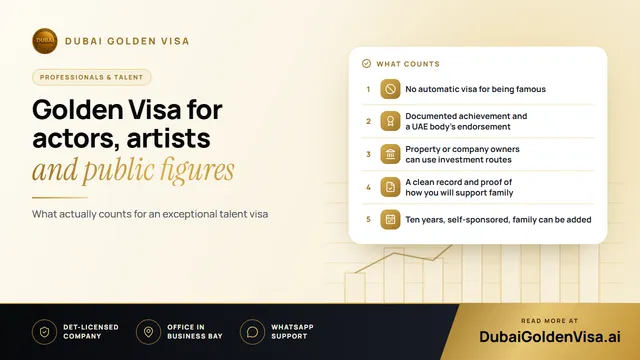
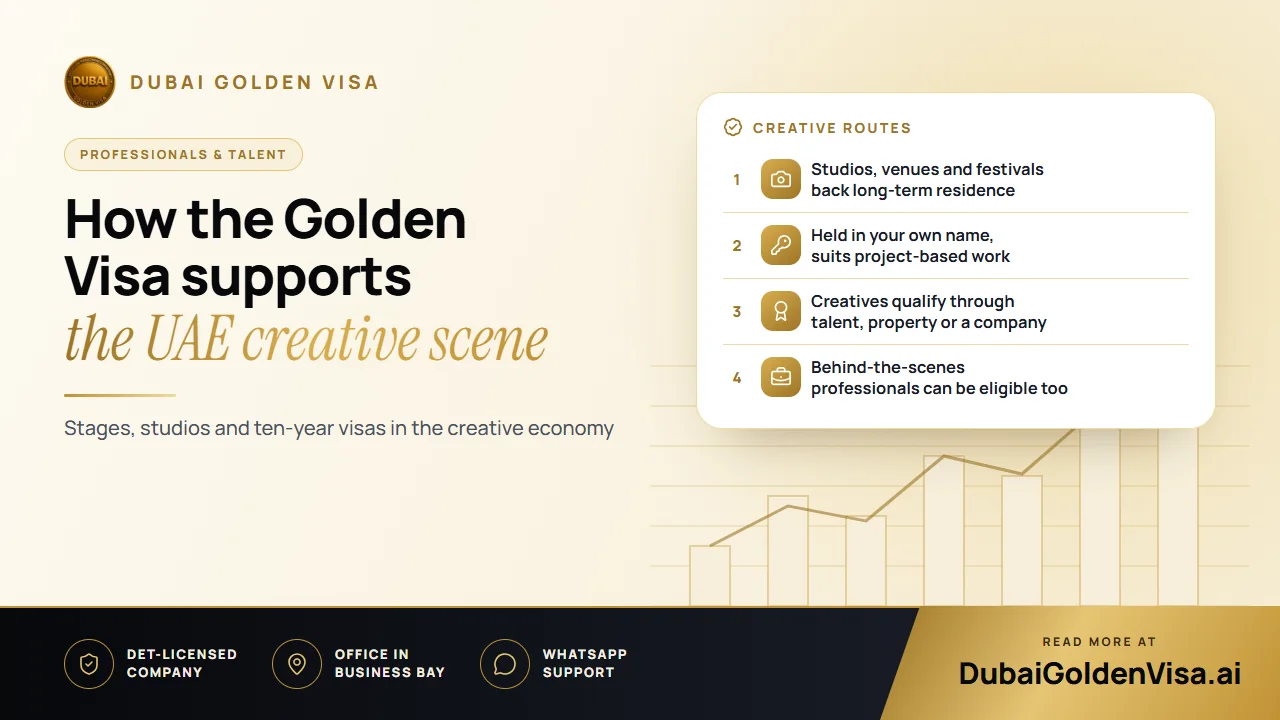
- Exceptional talent: for people with a documented record of achievement in the arts and culture, usually supported by an endorsement from a relevant UAE body.
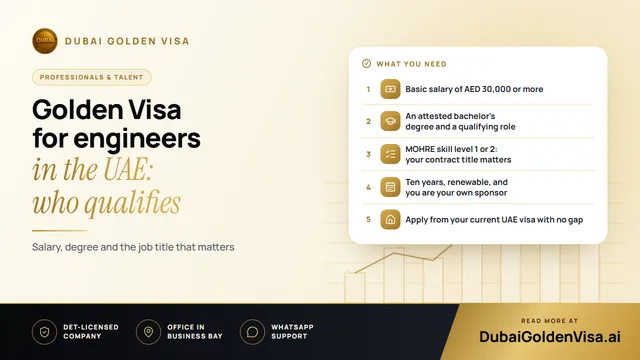
- Skilled professional: for technical or production roles with a basic salary of AED 30,000 or more, an attested bachelor's degree and a role in MOHRE skill level 1 or 2.
- Company owner or partner: for production company owners with AED 2 million or more in capital or share.
- Property: owning UAE property worth AED 2 million or more, independent of your career.
It's a mistake to assume this is only for famous faces. Directors of photography, sound designers, editors, producers and visual effects artists can all fit the skilled professional route if their pay and role meet the tests.
04A realistic path to applying
- 1
Pick the route
Compare talent, salary, company and property routes based on your documents.
- 2
Gather proof
Contracts, credits, awards, endorsement letters, company documents or title deeds, as relevant.
- 3
Apply while in the UAE
An entry permit can bring you in if you are abroad.
- 4
Approval and medical
Your current visa is cancelled only after initial approval, followed by the medical test and Emirates ID biometrics.
Timing depends on the route. Property files usually take five to seven working days once complete, while talent, company and salaried files commonly take two to four weeks.
Work in film, music or media and wondering which route suits you? Message us on WhatsApp for a free check, and we'll point you to the simplest way to qualify.
Questions about this topic
No. Skilled behind-the-scenes professionals can qualify on salary, degree and role, and owners can qualify on capital.
Questions about your own case?
Send us a message and an advisor will tell you which route fits and what you'll need.