
When people compare ways to get a UAE tourist visa, price is usually the first thing they look at. A government fee appears lower than an agency's total, so the obvious conclusion is to go direct. Sometimes that works. Often it is less straightforward than it looks, because the rules about who can apply, and who has to sponsor, are part of the picture.
This guide sets out the main routes in plain terms, so you can decide which fits your trip, your nationality and your patience for paperwork.
01The main routes at a glance
There are three common ways to end up with an e-visa. Each suits a different kind of traveller.
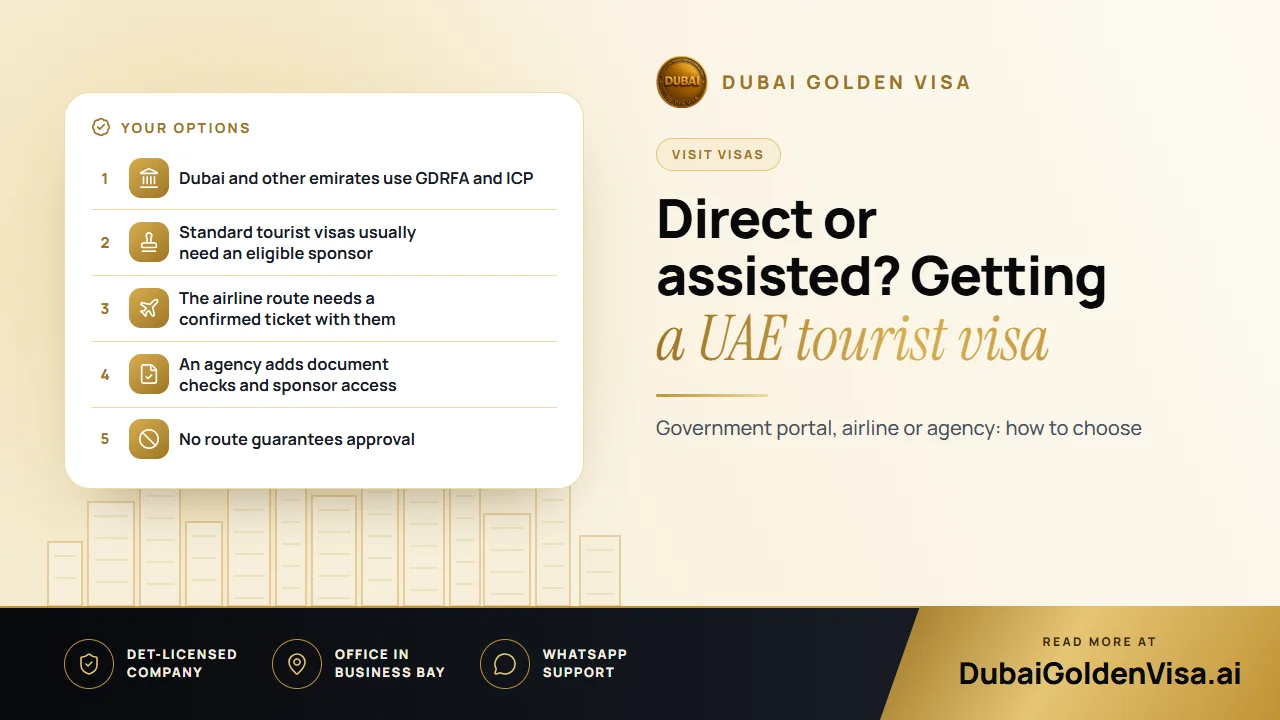
- Government channels. GDRFA Dubai deals with visas issued in Dubai. The federal authority ICP handles those issued through the other emirates. These offer official fees and status checks, but certain categories need a qualifying sponsor or host to submit them.
- The airline route. Some airlines let passengers on their own flights apply through their booking system. You normally need a confirmed, ticketed booking with that airline, and the airline's itinerary conditions apply, along with processing charges.
- An assisted service. A visa agency prepares and checks your file and files it through an authorised sponsor, such as a licensed tourism company. It is not tied to one airline, so it can suit travellers on any carrier.
02Why GDRFA and ICP both come up
A visitor planning a trip to Dubai can run into both names while researching. Visas issued in Dubai are generally checked through GDRFA, while visas from the other emirates, such as Abu Dhabi or Sharjah, are checked through ICP. Which one applies depends on who issued the visa, not on where you plan to stay.
For the traveller, the practical point is simple. Once you have the visa, you can usually move between all emirates within its conditions. But when you want to check validity, you must use the right authority's service for your visa. If you are unsure which issued yours, look at the e-visa and ask before you rely on a status result.
03The sponsor question
This is the part many first-time visitors miss. In Dubai, the standard 30-day and 60-day tourist visas are generally expected to be sponsored by an eligible establishment working in the tourism sector. Opening a government site does not by itself let every traveller sponsor and file every category on their own.
Where a sponsor is required, someone has to supply that arrangement. Hotels, airlines and licensed tourism companies do so for their guests and customers. An agency that files through a licensed partner is another way to reach the same result. Either way, being sponsored does not guarantee approval, and the sponsor must itself be authorised and available.
Tip
Why the fee difference exists
A published government fee is a base figure and usually excludes VAT and other charges. An agency's price also covers staff time, document checking, sponsor access and support. Compare the final total and what it includes, not the headline fee.
04Which route suits you?
- You hold a confirmed flight on an airline that offers its own visa service: that route may be the simplest.
- You have a hotel or host who can sponsor you directly: ask them what they can file.
- You want help with your documents, you are unsure of the rules for your nationality, or you need a sponsor: an assisted service may save time and avoid rejected files.
- You are a resident or a business traveller with a company: different permits may apply, so ask before choosing a tourist visa.
05Avoiding avoidable delays
Whatever route you choose, the same few things cause most problems: a passport with less than six months left, a blurred scan, a photo that does not meet the requirements, and details typed differently from the passport. Fix those before you send anything.
On timing, when we file through our partner tourism agency, standard processing usually runs two to three working days once documents are complete, and express handling takes around 12 to 24 hours. Leave a margin, particularly around weekends and public holidays, and avoid non-refundable bookings until the visa is issued.
If you are weighing up these options for a trip, message us on WhatsApp with your nationality and travel dates. We will give you a free check and explain which route makes sense for you.
Questions about this topic
The published base fee can be lower where direct application is allowed, but extra charges may apply and not every traveller can use it. Compare the full cost and what it includes.
Questions about your own case?
Send us a message and an advisor will tell you which route fits and what you'll need.